A HOUSEHOLD HOW-TO · FIRST STEPS
Build a grab-and-go
household tote.
If you had to leave home quickly, would the essentials be in one place? Start with a bag you already own, then make a separate plan for the supplies that cannot fit inside.
September 27 edition · Published September 27, 2026 · 5-minute read
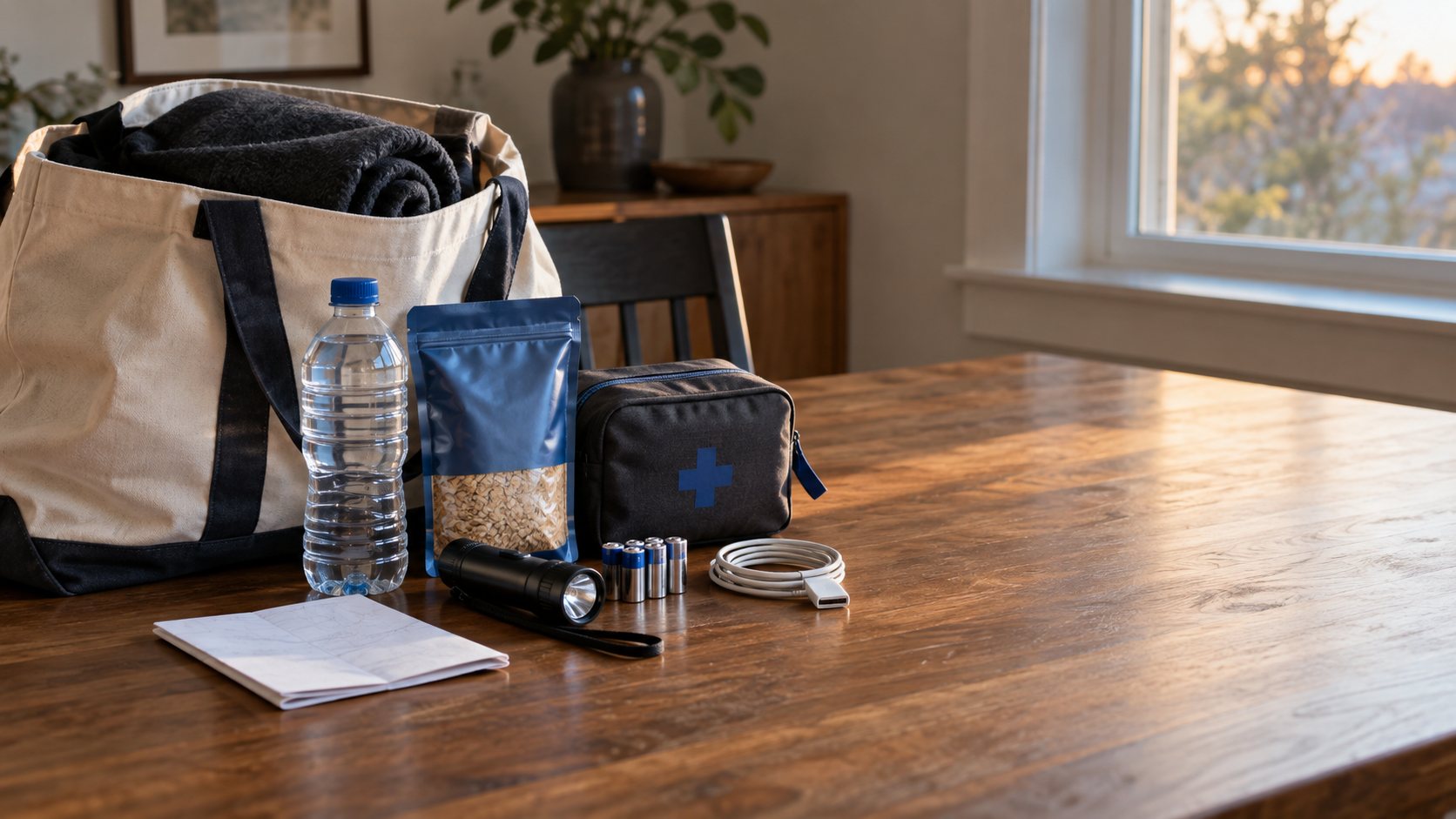
1. Put one usable bag by the door.
Choose a tote or backpack you already have and can carry comfortably. Label a shelf or closet spot everyone in the household can describe. The free first action is to place the empty bag there today. A bag is only a way to organize a few essentials; it does not replace a stay-at-home water and food plan.
2. Pack five easy-to-check groups.
Information: write a small paper contact card with household and out-of-town numbers, a meeting place, and relevant medical contacts. Store copies of important documents securely; consider privacy and who can access the bag.
Light and communication: add a working flashlight, the correct spare batteries, a phone charging cable and, if you own one, a charged power bank. Test the light and cable rather than assuming they work.
Health: include a basic first-aid pouch and a written list of medicines or essential equipment. For actual medication supply, temperature-sensitive drugs or powered devices, make a personal plan with the clinician, pharmacist or equipment supplier; do not leave medicines in a hot bag without checking storage instructions.
Food and hygiene: add a sealed, shelf-stable food item you already eat, plus a small hygiene pack. Review labels and replace items before their use-by dates. If someone has allergies or a special diet, their suitable food goes on the list.
Water and personal needs: put in a sealed bottle for immediate use, then write where the rest of your evacuation water is stored. Add glasses, mobility items, baby or pet supplies as your household needs them.
3. Check the plan beyond the tote.
The American Red Cross recommends an easy-to-carry emergency kit and lists water, food, a flashlight, batteries, first aid, medicines, documents, a charger and contacts. Its water starting point for evacuation is one gallon per person per day for three days. That can be much more than one tote can carry. Use our water-station guide to count the water you can actually move, and adapt the plan to people, pets, transportation and local official instructions. The Red Cross also recommends a larger stay-at-home supply, so keep those plans distinct.
4. Rehearse the grab.
Pick up the bag, carry it to your exit, and notice what is too heavy or missing. Ask another household member to find it without hints. Write any missing item on a card in the bag, then put it back in its spot. Set a calendar reminder to retest batteries, update contact numbers and rotate food or water. This rehearsal and reminder are optional practical habits, not official time requirements.
Sources and review
Official and manufacturer sources checked September 26, 2026. The five-group organization and rehearsal are optional practical suggestions. The photo is AI-generated and illustrative. No live evacuation or government endorsement is implied.
- American Red Cross: Survival Kit Supplies — easy-to-carry kit, listed supplies and evacuation water starting point.
- American Red Cross: Getting Ready to Evacuate — go-kit and following evacuation routes.
- Streamlight: MicroStream — AAA personal-light specification.
What would your household take?
Use the free household quiz. Answers stay in your browser.
Take the quiz →