A HOUSEHOLD HOW-TO · FOOD & WATER
Build a no-cook emergency food box
from your pantry.
If the power goes out, a cupboard full of ingredients is not always a meal. Set aside familiar food that can be eaten safely without a stove, count it by people and days, and keep the opener where the food is.
October 8 edition · Published October 8, 2026 · 5-minute read
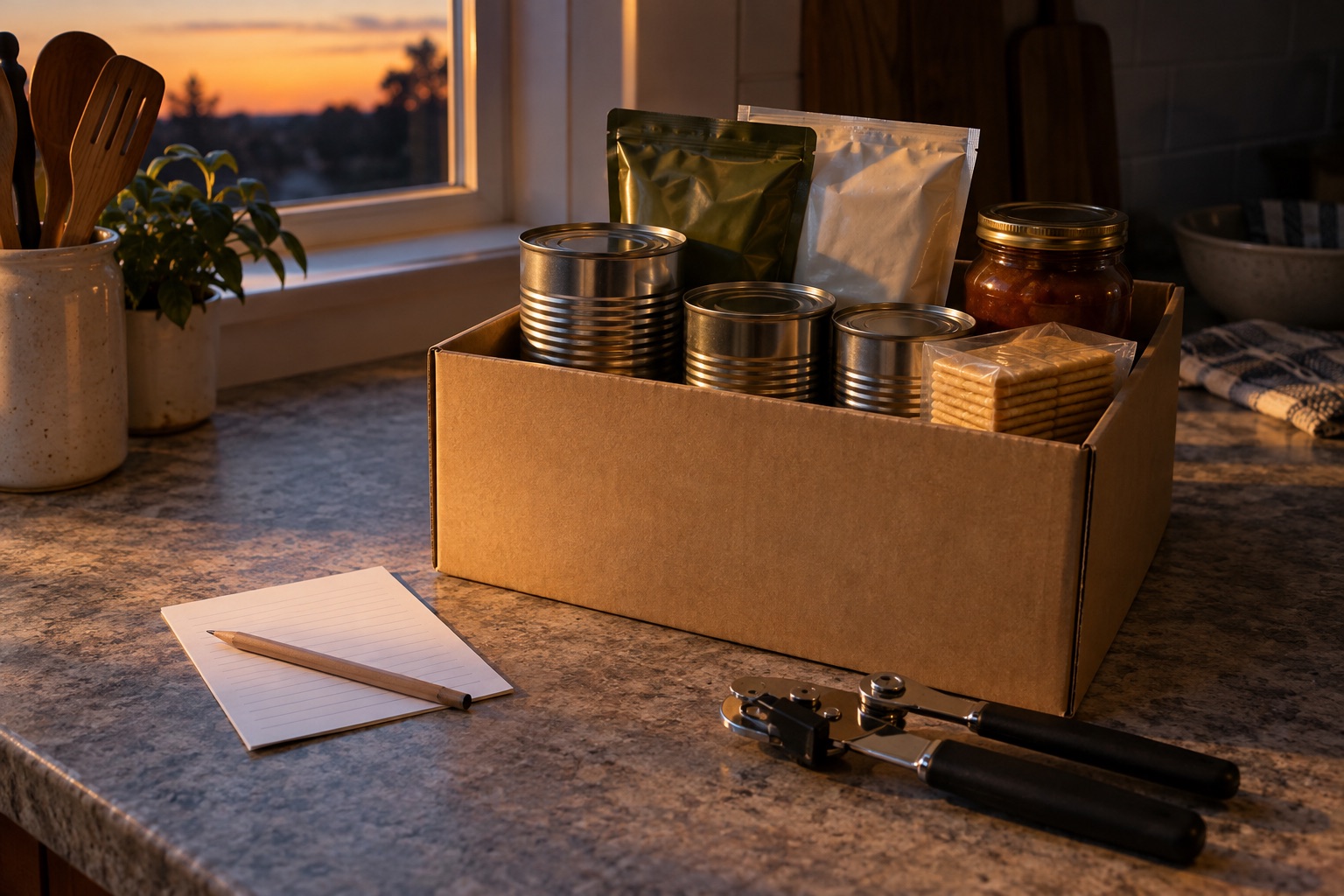
1. Start free: write one day of meals using food you already eat.
Take a sheet of paper and list everyone who would eat from your supply. Sketch breakfast, lunch, dinner and snacks for one day using unopened shelf-stable food already at home. Check each label: some canned foods say “Keep Refrigerated,” and some dry staples need heat or water to become a meal. Favor a realistic no-cook option for each person, including allergies and other dietary needs. This is an inventory, not a promise that a few cans cover a day. The American Red Cross recommends nonperishable, easy-to-prepare food, with a three-day evacuation supply and a two-week at-home goal. Build from the meals you can actually count toward those goals.
2. Test the meal, not just the package count.
Put the unopened food for one sample meal beside a plate and utensil. Can you open it without power, eat it as packaged, and serve enough for the people on your list? Set a working manual can opener in or next to the box if any can needs one; the Red Cross includes one in its kit list. Keep infant formula or food, pet food and specialized foods on separate lines so they do not disappear inside a generic “three days” estimate. If a meal needs cooking, refrigeration after opening, or extra water, mark that dependency and choose a true no-cook fallback. Do not taste questionable food as a safety test.
3. Count portions and water separately.
Write each person's daily portions on the card, then multiply by the days you are planning for. Add only unopened packages you can actually locate; note gaps without treating them as stocked. Store drinking water as its own supply, not as an assumed ingredient: the Red Cross lists one gallon per person per day for drinking and sanitation planning, with the same three-day evacuation and two-week home targets. Households with greater medical, infant, pet or heat-related needs may require a more specific plan. Our water-station guide helps you calculate and label what is actually on hand.
4. Store the box where food will stay safe.
Choose a cool, dry, reachable shelf, away from the stove, damp places and temperature extremes. USDA FSIS advises cool, dry storage for canned and other shelf-stable food, and warns that some cans marked “Keep Refrigerated” are not pantry food. Keep the box above likely floodwater level where that is relevant. Before adding any item, inspect the container. Never use a leaking, bulging or badly dented can, a cracked jar, or a package with a broken seal. FoodSafety.gov advises discarding food that may have contacted floodwater or stormwater, and bulging, opened or damaged containers. It describes a specific salvage procedure for undamaged commercially prepared cans and pouches; this guide does not ask you to perform it. When unsure after an event, use current official guidance rather than trying to rescue a suspect package.
5. Keep it part of normal meals.
Write the contents and a review date on the card. At the next ordinary grocery or pantry check, use older safe packages in your normal meals and replace them with foods your household still likes. Recheck labels, container condition, opener function and the number of people you are feeding. Start with the one day you can verify, then expand your inventory toward the Red Cross targets as space and budget allow. If you must leave, take the portable food you can carry without delaying an official evacuation instruction.
Sources and review
American Red Cross, USDA FSIS and FoodSafety.gov guidance checked October 8, 2026. The one-day menu and inventory card are our practical organizing steps, not an official serving formula. The generated image is illustrative. No product is tagged: inventorying existing food is the free first action, and no exact product was selected or verified.
- American Red Cross: Survival Kit Supplies — easy-to-prepare nonperishable food, manual can opener, water amounts and planning durations.
- USDA FSIS: Shelf-Stable Food Safety — what shelf-stable means, “Keep Refrigerated” exceptions, cool dry storage and unsafe containers.
- FoodSafety.gov: Food Safety in a Disaster or Emergency — floodwater contact, damaged containers and post-disaster food decisions.
What does your household already have?
Use the free household quiz. Answers stay in your browser.
Take the quiz →