A HOUSEHOLD HOW-TO · APARTMENT LIVING
Build an apartment outage kit
that fits your space.
A closet-sized kit is still useful if you can reach it in the dark. Start with a small carry bag and one nearby supply spot, then check the building details a generic checklist cannot know for you.
October 7 edition · Published October 7, 2026 · 5-minute read
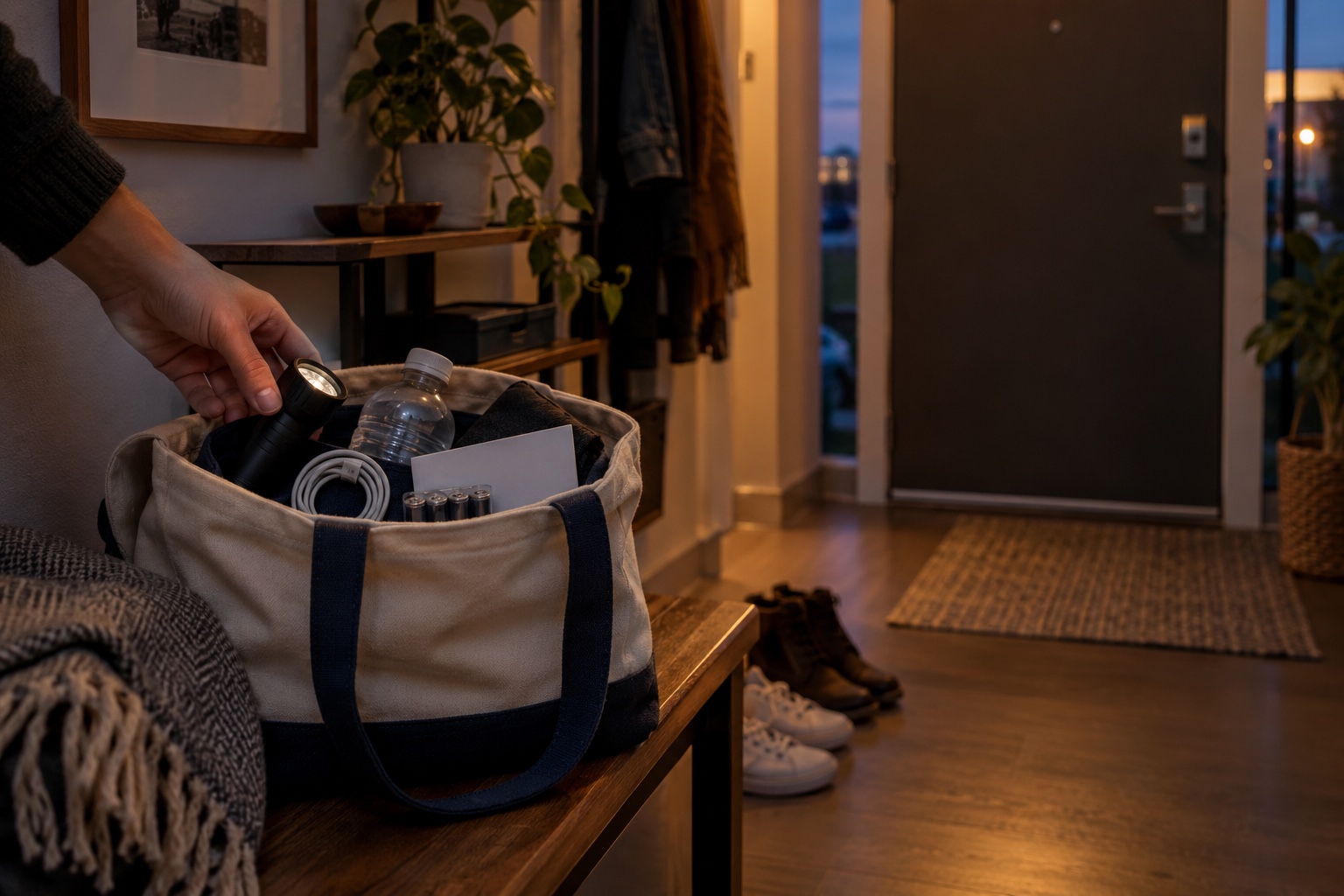
1. Start free: pick one reachable spot and use what you own.
Choose a shelf or bin you can find without crossing a dark room. Put a small bag there for items you might carry out; keep heavier stay-at-home supplies beside it rather than pretending every gallon of water fits in a backpack. Open a note or take a sheet of paper and make two columns: “here now” and “still needed.” The American Red Cross kit list includes water, shelf-stable food, a flashlight, radio, batteries, first aid, medications and personal items. Adapt it to the people and pets actually living in your unit. The first win is finding those items, not buying a prepacked kit.
2. Test the light and the contact chain.
Turn on the flashlight you already have and check its batteries or charge. Place it where a hand can reach it from the sleeping area; keep a second light near the main exit if you have one. Test your phone with its cable and existing battery pack as one chain, then put a paper contact card in the bag. The Red Cross power-outage guidance recommends communication options that work without household electricity and a paper support-network list. Ask a neighbor, friend or family member whether they can check in or help if a long outage changes your ability to stay. Use flashlights instead of candles; the U.S. Fire Administration specifically warns against candles for outage lighting.
3. Separate the small bag from the home supply.
Put a copy of the contact card, a tested light, charger, essential personal items and any practical pet-leash or carrier plan in the carry bag. Keep water and nonperishable food at the nearby supply spot. Count water by people and days instead of by how full the shelf looks: the Red Cross lists one gallon per person per day, with a three-day evacuation supply and a two-week at-home goal. Start with the safe water you can store and build from there. Our water-station guide shows how to count and store it. Review food, medications, infant supplies and pet needs separately; ask a clinician or device supplier about any refrigerated medicine or power-dependent medical equipment rather than improvising its storage or backup.
4. Ask the building questions before you need the answers.
Write down your building management's contact number, the way it sends outage notices, and the applicable exit and assistance plan. Ask what happens to elevator service, access-controlled doors and shared water if power fails; the answer is specific to your building and can change. If you cannot use stairs or need help leaving, arrange an individual plan with management and a trusted support person now. The Red Cross tells households to consider elevators, locks, medical devices and a support network when planning for a long outage. Keep your bag out of corridors and exits. Do not assume an elevator, generator or shared outlet will be available, and do not operate a portable generator, grill or camping stove in an apartment, hallway, balcony or other enclosed or partly enclosed space: CDC warns that fuel-burning equipment can produce deadly carbon monoxide indoors and near openings.
5. Rehearse one decision: stay or leave.
With the lights on, walk from your sleeping area to your kit and exit. Can everyone carry the bag? Can each person name where to get local alerts and where to go if the unit becomes too hot, too cold or unsafe? The Red Cross advises planning when to leave if temperature or a power-dependent medical need makes staying unsafe. In a real outage, check your utility, building and local emergency messages first. Leave when officials instruct you to leave; seek an appropriate heated or cooled location if conditions become unsafe. Never use a gas oven to heat the unit. Review and restock the shelf on a calendar so the tested light and supplies remain usable.
Sources and review
American Red Cross, U.S. Fire Administration and CDC guidance checked October 7, 2026. The one-shelf/two-column exercise and questions for management are our practical organization steps, not a claim about any particular building. The generated image is illustrative. No product is tagged: finding and testing existing supplies is the free first action, and no exact product was selected or verified.
- American Red Cross: Power Outage Safety — light, contacts, power-dependent needs, elevators and locks, safe heat and the stay-or-go decision.
- American Red Cross: Survival Kit Supplies — basic kit categories and water planning amounts.
- U.S. Fire Administration: Candle Fire Safety — flashlight rather than candle lighting during outages.
- CDC: What to Do to Protect Yourself During a Power Outage — carbon monoxide, unsafe heating, temperature, food and water hazards.
Which apartment basics are ready?
Use the free household quiz. Answers stay in your browser.
Take the quiz →