A HOUSEHOLD HOW-TO · POWER
Build a blackout
light station.
When the lights go out, you should already know where the first working light is. Make that true tonight with what you own.
September 25 edition of the Journal · Published September 26, 2026 · 4-minute read
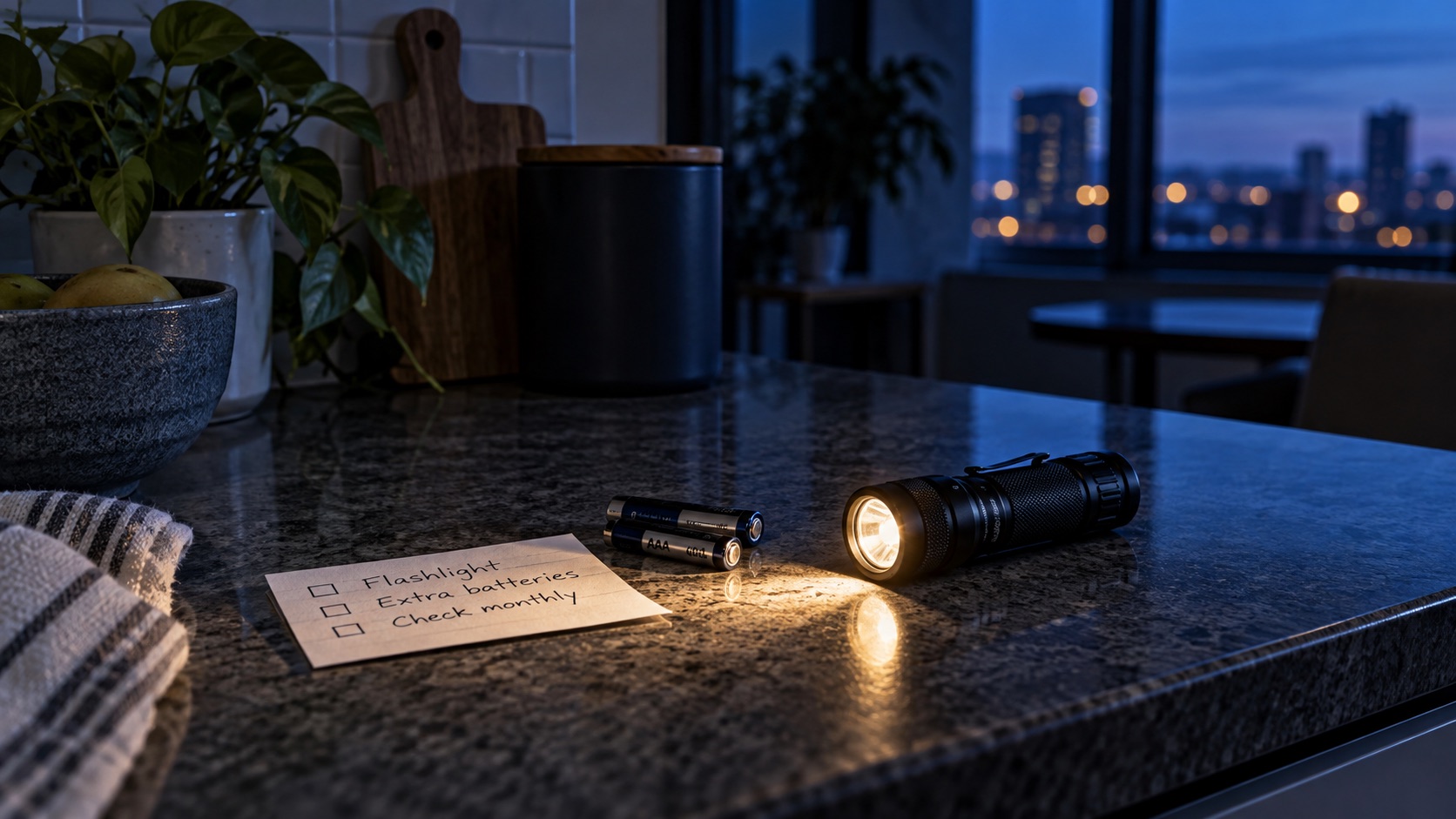
1. Find and test the light you already have.
Turn on each flashlight or battery lantern in your home. Check whether its beam is useful for walking across a room and whether the switch works reliably. If a light does not turn on, check the battery orientation and the manufacturer's instructions before deciding it is broken. Keep a working light within reach of a normal route through your home. This test is the free first step.
The U.S. Fire Administration advises using flashlights instead of candles during a power outage. Do not plan to make or burn emergency candles as your primary lighting method. A phone flashlight can help briefly, but saving the phone for communication is a sensible household choice.
2. Match the backup to the actual light.
Read your light's battery marking or manual. Put a compatible spare set next to it, or charge its rechargeable battery according to its instructions. Do not assume every small light uses the same cells. Test again after changing or charging the battery. Keeping a second small light in another reachable location is an optional practical choice, especially if a hallway or stairs separates household members from the first light.
3. Choose a place everyone can describe.
Pick one stable, reachable place, such as an entry drawer or a shelf near the bedroom door. Keep the station out of children's reach where battery access is a concern. Tell everyone in the household the exact location. Put a short note in your household plan: “Working light: _____. Spare power: _____.” Practice finding it once with the room lights off, while it is safe to do so.
If anyone relies on powered medical equipment, the light station is only one small part of their separate backup plan. Follow their clinician's and equipment supplier's instructions for power loss.
4. Repeat a quick check.
Set a reminder on your own calendar to test the light and its backup power periodically. This is a practical habit, not an official required interval or an automatic service provided by this site. Replace depleted batteries and keep the device dry according to its manufacturer's instructions.
Sources and review
Official fire-safety guidance and manufacturer specifications checked September 26, 2026. Station placement, note-taking and practice steps are optional practical suggestions. No current outage or government endorsement is implied. The illustrative image is AI-generated and is not a product photograph.
- U.S. Fire Administration: Candle Fire Safety — flashlights instead of candles during outages.
- Streamlight: MicroStream — AAA battery and personal-light product specifications.
What would your household do first?
Take the free power-outage quiz. Answers stay in your browser.
Take the quiz →