A HOUSEHOLD HOW-TO · KIT MAINTENANCE
Check what is missing from your first aid kit.
October 20 edition · Published October 20, 2026 · 4-minute read
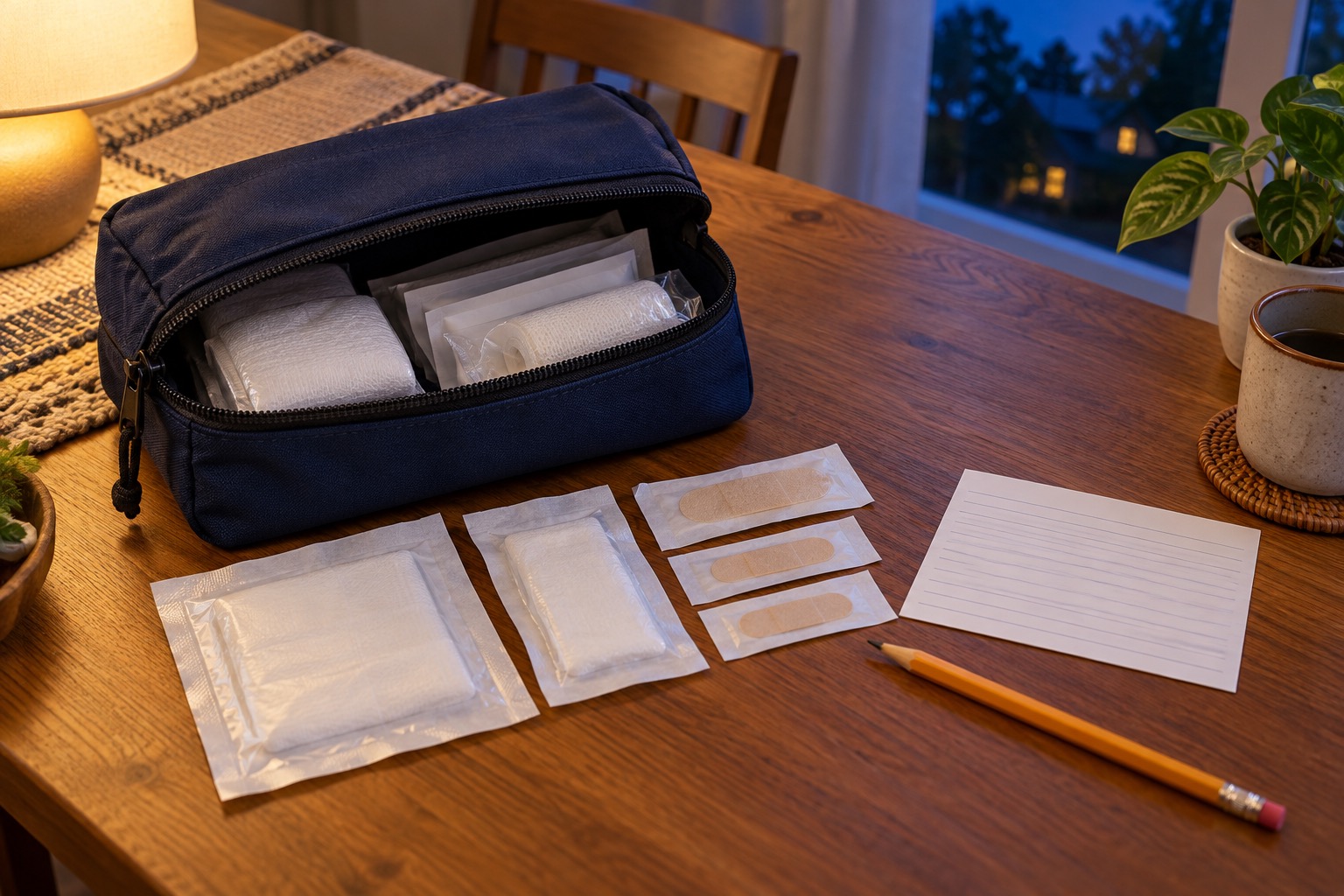
The kit is in its usual place, but the bandages used last month may never have been replaced. A quick inventory turns “we have a kit” into a more useful account of what is present, missing or uncertain.
1. Start free by finding the existing kit.
During ordinary conditions, locate your household kit and make sure the responsible adults know where it is. Choose a clear surface for the check. Keep medicines and sharp items secure and follow their storage labels. If the kit belongs to a workplace or shared building, ask its responsible operator about the inventory rather than opening or removing supplies without permission.
2. Read packages without opening them.
Look at the item names, visible package condition and any expiration dates. Do not open sterile wrappers to count their contents. A sealed-looking package is not proof that an item is suitable to use; follow the manufacturer’s labeling. Put unclear dates, damaged packaging or unknown items on a question list instead of treating them as verified supplies.
3. Make a short missing-items list.
The American Red Cross recommends checking kits regularly and replacing used or out-of-date contents. Compare your existing inventory with its linked kit guidance and with any household-specific advice from your healthcare provider. Its general list is a starting point, not an individual prescription. This guide does not recommend a medicine, dose or treatment, and a purchase is not the free first step.
4. Resolve questions with the right person.
Ask a pharmacist or healthcare professional about medicines, unclear labels and household-specific needs. Follow appropriate local guidance for disposal rather than improvising. Do not repackage unidentified medicines or use this inventory to change anyone’s prescription. Keep unresolved items clearly recorded so they are not mistaken for ready supplies.
5. Close the maintenance loop.
Our organizing suggestion is to write the check date, the gaps and who will resolve them. Return the kit to appropriate storage. Recheck after supplies are used and set a reminder for another review; use label dates and professional advice to identify earlier action. Let the household know when an item is still missing. Knowing where a kit is and checking its contents do not replace first aid training or emergency services.
Phone-save recap
Find it. Read labels. Keep wrappers intact. Record gaps and unknowns. Get qualified answers. Replace used or out-of-date contents and check again after use.
Sources and review
American Red Cross kit guidance opened October 20, 2026. The dated gap list, responsible-person handoff and reminder are our organizing suggestions. No product or medicine selected; checking your existing kit is free.
What else is unresolved?
Use the free household quizzes. Answers stay in your browser.
Take a free quiz →KEEP YOUR NEXT STEPS TOGETHER
Turn your notes into one household plan.
The $29 Ready Before Dark digital bundle gives you printable planning worksheets and an editable offline workbook for your supplies, contacts and next actions. Complete it on your own device.
Get the planning bundle · $29 →
One-time purchase through Gumroad. No physical supplies, subscription or services. Start with the free checklist or see what is included.