A HOUSEHOLD HOW-TO · SHOPPING WITH A PLAN
Check a water container’s fit before buying it.
November 3 edition · Published November 3, 2026 · 4-minute read
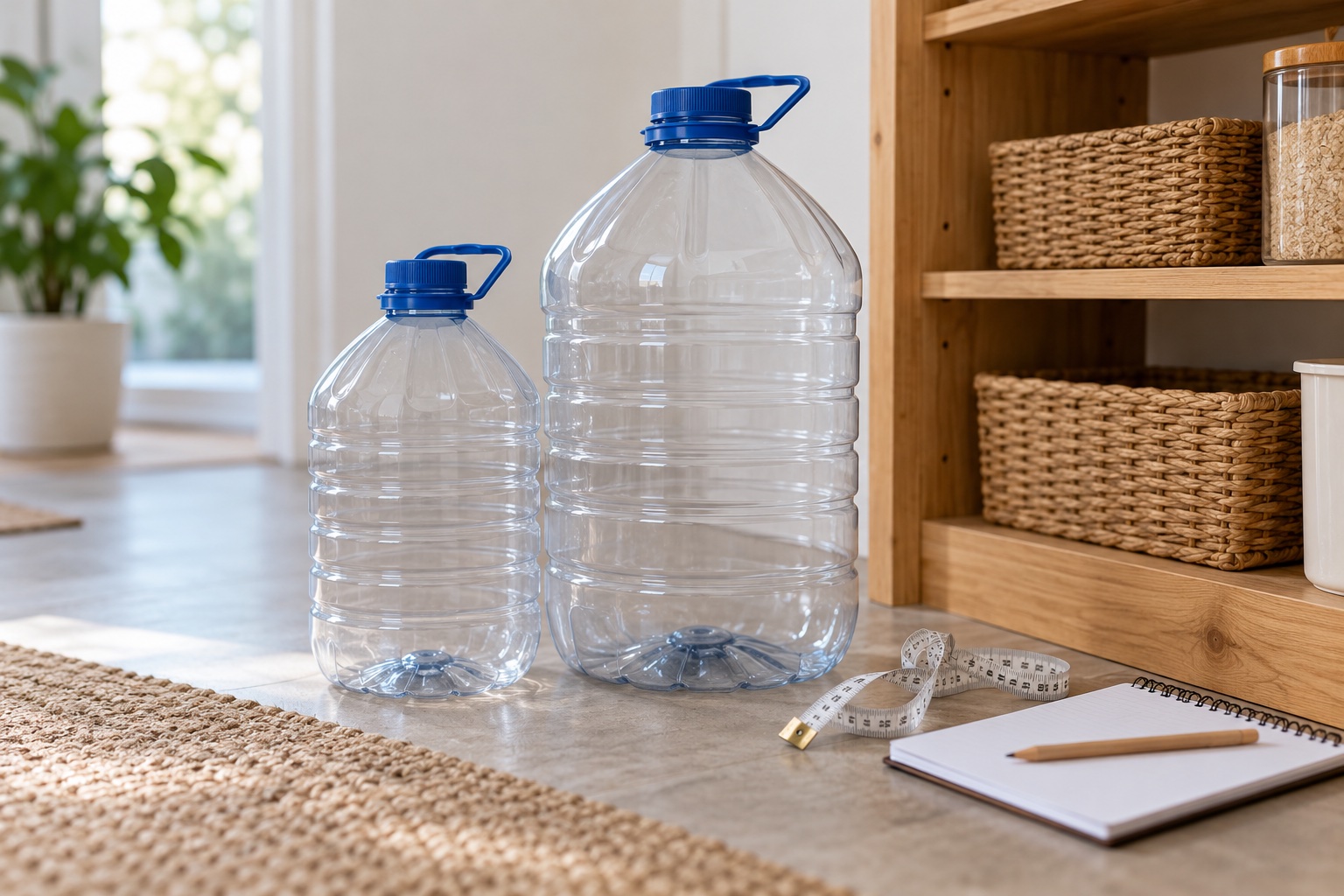
The largest water container is not automatically the most usable one. A container still needs an appropriate storage place and a practical way to dispense water. Before choosing capacity, take a few measurements and write down who will handle it.
1. Start free by measuring the space.
Measure the available footprint and height in a place you already use for suitable household storage. Leave room for the cap or spigot to operate as the manufacturer intends. Our measuring exercise checks fit only; it does not certify a shelf's load capacity. Do not put a heavy filled container on an uncertain shelf.
2. Confirm intended use.
CDC recommends food-grade water-storage containers and says to ask the manufacturer when suitability is uncertain. A tight closure, durable material and a pourable opening matter. Never repurpose a container that held toxic chemicals. An attractive camping shape or a recycling symbol alone does not answer the food-grade question.
3. Plan handling before filling.
Consider how the intended user will access and dispense the water. Do not test your limits by lifting a large filled container. Smaller containers may be more manageable for some households; compare your actual needs and available help. Read the manufacturer's filled-use and stacking instructions, not only the empty product's dimensions.
4. Match capacity to the plan.
Count usable water you already have before calculating the remaining gap. CDC's starting guidance is at least one gallon per person per day for three days, with more needed in some circumstances. A single container's advertised capacity is not a complete household supply. Write down the intended reserve and how it fits your storage arrangement.
5. Keep care instructions with the choice.
Before use, follow the current CDC cleaning, sanitizing and storage guidance linked below and the container's instructions. This article does not provide a water-treatment recipe or say that a container makes unsafe water drinkable. During a real water advisory, follow your utility or health department's instructions. Buying a container is optional; verifying the space and existing supply is today's free action.
Phone-save recap
Measure space. Verify food-grade use. Plan handling. Check filled-use limits. Count the supply you already have.
Sources and review
Sources opened October 30, 2026. The step-by-step comparison and organizing method are Ready Before Dark suggestions; linked sources support the specific guidance identified above. Manufacturer information was checked against the existing product identity. Amazon public search snapshots matched the item; live stock, seller and delivery were not verified.
- CDC: How to Create an Emergency Water Supply
- Reliance Outdoors: Aqua-Tainer
- Reliance Outdoors: Water Container FAQs
Choose your next household action.
Take a free private quiz, or use the digital bundle to organize your plan. Quiz answers stay in your browser.
Take a free quiz →