A HOUSEHOLD HOW-TO · HOME SAFETY
Check your carbon monoxide alarm
before heating season.
Carbon monoxide has no smell or color. Before a cold night puts the furnace to work, take a few minutes to find your household's alarms, check them and make sure everyone knows what a real alarm means.
October 6 edition · Published October 6, 2026 · 5-minute read
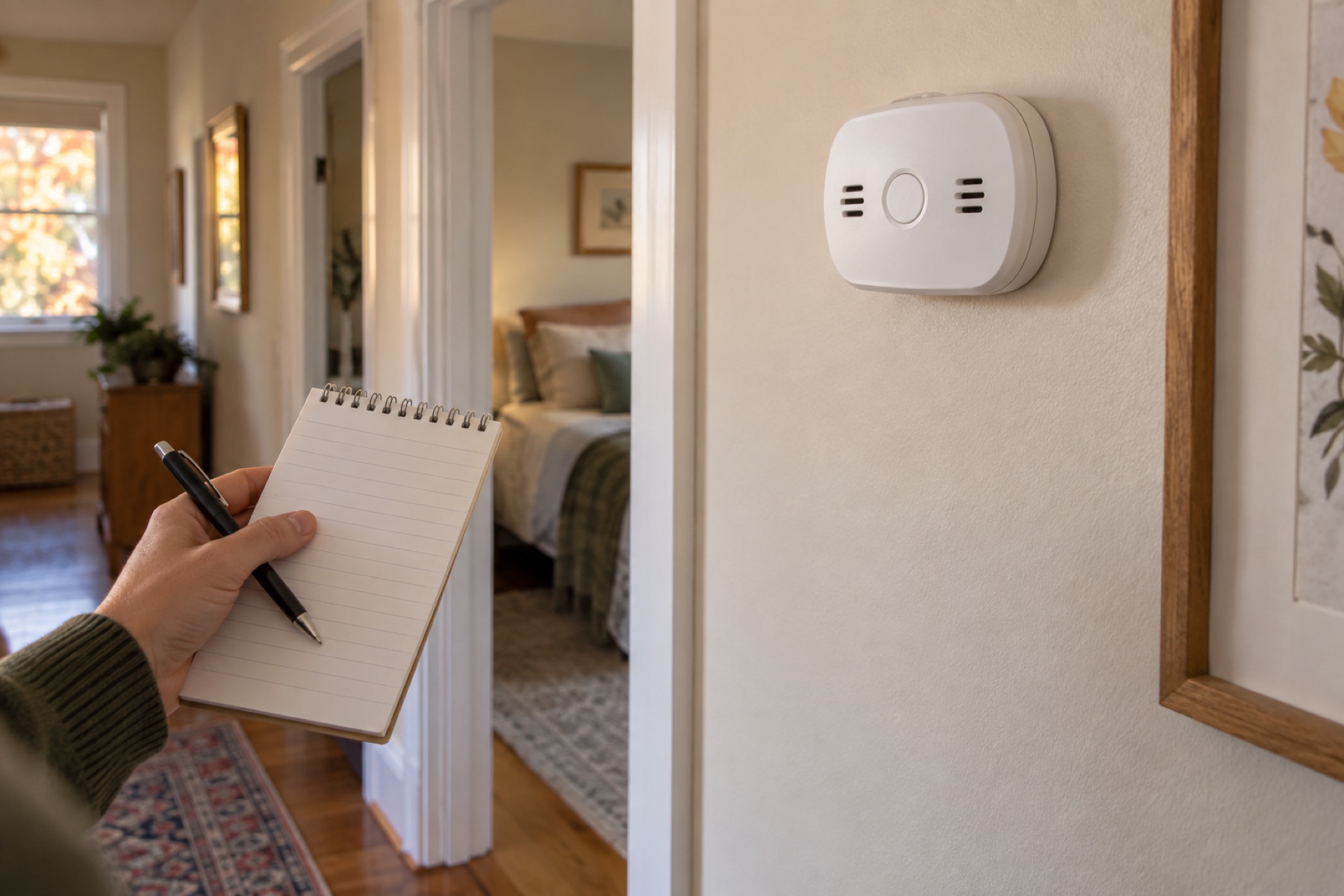
1. Start free: find the alarms already in your home.
Walk from each sleeping area and locate the carbon monoxide (CO) alarm. Check each level of the home too. The U.S. Fire Administration calls for CO alarms outside each separate sleeping area and on every level; follow your local code and the manufacturer's placement directions. A smoke alarm alone is not a CO alarm. If you cannot find a CO alarm, record that gap today and ask your landlord or local fire department about the applicable requirements and installation. Do not treat the absence of an alarm as proof the air is safe.
2. Test each one without guessing what the button proves.
Read the label or manual, then use the manufacturer's test procedure. The U.S. Fire Administration says to test CO alarms at least monthly. A button test checks the alarm's test function; it is not a measurement of your home's current CO level. If it fails, signals an end-of-life condition or you cannot determine whether it works, follow the manufacturer's replacement directions. If an alarm is sounding and you cannot confidently identify a harmless test or low-battery signal, leave and call for help from outside instead of troubleshooting in the home.
3. Check age, power and the fuel-burning equipment.
Look for the model and replace-by date or manufacture date. Write down what you find; follow the maker's replacement interval or end-of-life signal rather than assuming a new battery makes an old sensor reliable. The CDC recommends battery-operated or battery-backup CO detectors near sleeping areas and replacing them according to manufacturer instructions. Check or replace a user-replaceable battery as directed. The same CDC guidance calls for annual service of heating systems, water heaters and other gas-, oil- or coal-burning appliances by a qualified technician. A household alarm check does not replace that service.
4. Agree on the response before anyone hears a siren.
Tell everyone in the household: leave the building for fresh air, bring others out if you can do so without delaying escape, then call 911 or the local emergency number from outside. Do not reopen the door to investigate the source. The CDC advises leaving and calling 911 when a CO detector sounds. Headache, dizziness, weakness, nausea, chest pain and confusion can be CO symptoms; seek emergency medical help if exposure is possible. A person can be ill before an alarm has sounded, so symptoms are also a reason to get out and seek help.
5. Add one reminder and one prevention check.
Put a monthly alarm-test reminder on a calendar and note each device's replacement date. Before using a fireplace or heating appliance, make sure the qualified service and vent checks are current. Never use a gas oven to heat a room. Never run a generator, camp stove or charcoal grill indoors, in a garage or near an opening. If you use a portable generator, the CDC says to operate it outdoors more than 20 feet from windows, doors and vents. A CO alarm is a warning layer, not permission to use fuel-burning equipment in an unsafe place.
Sources and review
CDC and U.S. Fire Administration guidance checked October 6, 2026. The household walk-through, dated device note and calendar reminder are planning steps derived from those sources. The generated image is illustrative. No product is tagged: checking the alarms already installed is the free first action, and no exact replacement model was selected or verified.
- CDC: Carbon Monoxide Poisoning Basics — symptoms, detectors, replacement instructions, annual fuel-appliance service and generator placement.
- U.S. Fire Administration: Carbon Monoxide Poisoning Prevention — alarm locations and prevention.
- U.S. Fire Administration: Carbon Monoxide Safety Pictographs — monthly alarm testing and placement.
- CDC: Safety Guidelines After an Earthquake — leave immediately and call 911 if a CO detector sounds (the response applies beyond earthquakes).
What else should your household know?
Use the free household quiz. Answers stay in your browser.
Take the quiz →