A HOUSEHOLD HOW-TO · SHOPPING WITH A PLAN
Choose a personal light or a room light before you buy.
October 31 edition · Published October 31, 2026 · 4-minute read
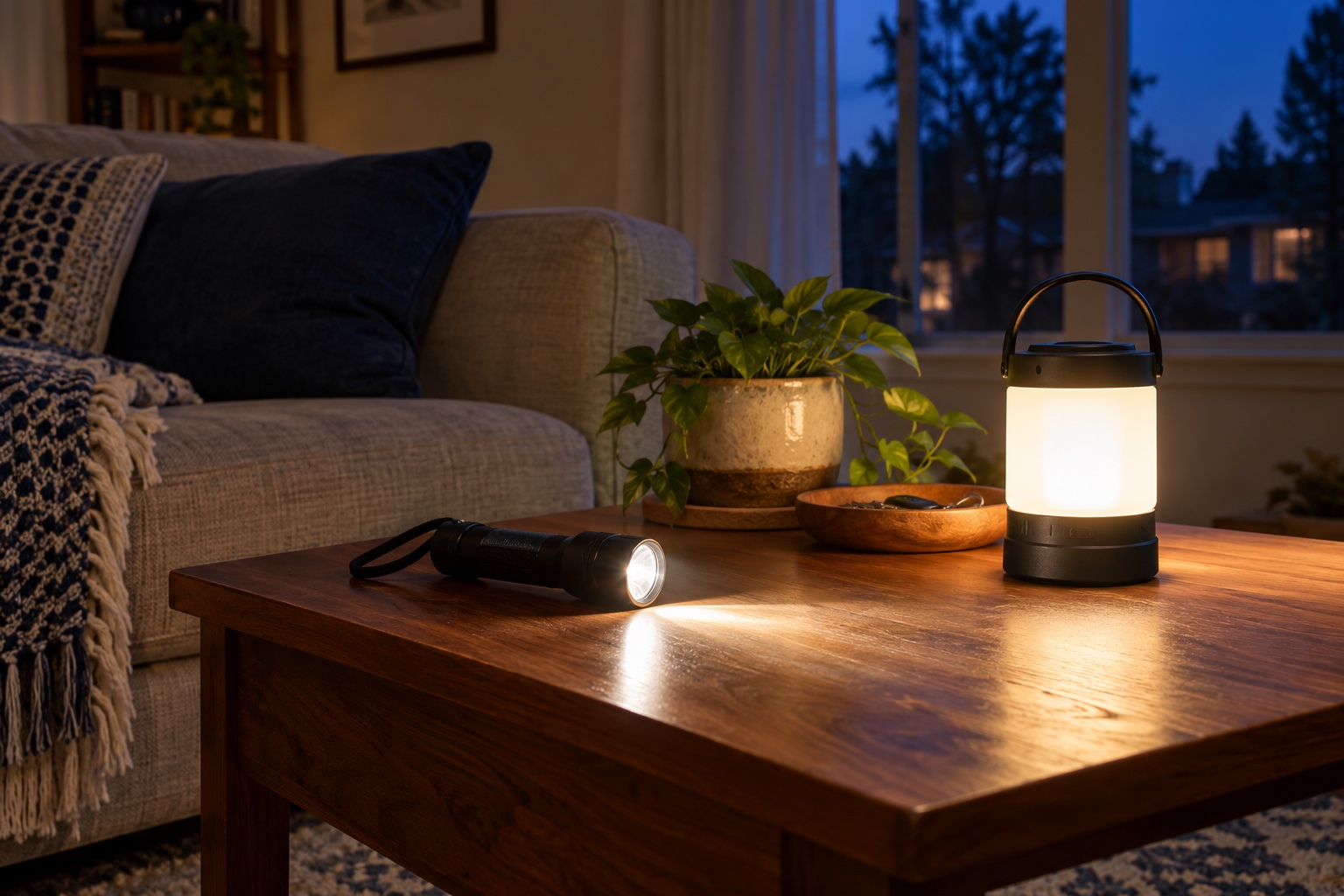
A flashlight in an online cart can look like the answer to every outage problem. Start with a narrower question: do you need light that travels with one person, or light that stays beside a shared activity? Those are different jobs.
1. Start free with the light you own.
In normal conditions, place your existing light beside the ordinary task you want it to support, such as reading a contact card at a table. Try the controls without pointing the beam at anyone's eyes. Record one thing that works and one gap. Do not create a blackout or obstruct a walking route for this check.
2. Name the job in one sentence.
Write either “a light I can carry” or “a light for this table,” then add who will use it. A focused handheld beam and a diffuse battery lantern serve different purposes. That comparison is our practical shopping framework. The U.S. Fire Administration recommends flashlights instead of candles during a power outage.
3. Compare controls and power, not just brightness.
Read the exact model's instructions before buying. Check the battery type, whether it is rechargeable, how it charges and whether required accessories are included. Similar product names can describe different power systems. Consider whether the intended user can operate the switch and read any charging indicator. A brighter listing headline does not answer those questions.
4. Give it a usable home.
For a stationary light, identify a stable place that leaves the activity area clear. For a personal light, choose a location its user can find. Record the location on your household list. Follow the maker's storage instructions; this article does not establish a runtime for your conditions.
5. Buy only for the remaining gap.
If the existing light does the job, your next action may simply be writing down its location. If it does not, compare the replacement against your sentence from step two. Keep the exact model name and instructions with your inventory so future battery shopping is straightforward.
Phone-save recap
Name one job. Try your existing light. Check the exact power system. Choose a place. Buy only for a recorded gap.
Sources and review
Sources opened October 30, 2026. The step-by-step comparison and organizing method are Ready Before Dark suggestions; linked sources support the specific guidance identified above. Manufacturer information was checked against the existing product identity. Amazon public search snapshots matched the item; live stock, seller and delivery were not verified.
Choose your next household action.
Take a free private quiz, or use the digital bundle to organize your plan. Quiz answers stay in your browser.
Take a free quiz →