A HOUSEHOLD HOW-TO · SHOPPING WITH A PLAN
Choose an appliance thermometer you can actually read.
November 2 edition · Published November 2, 2026 · 4-minute read
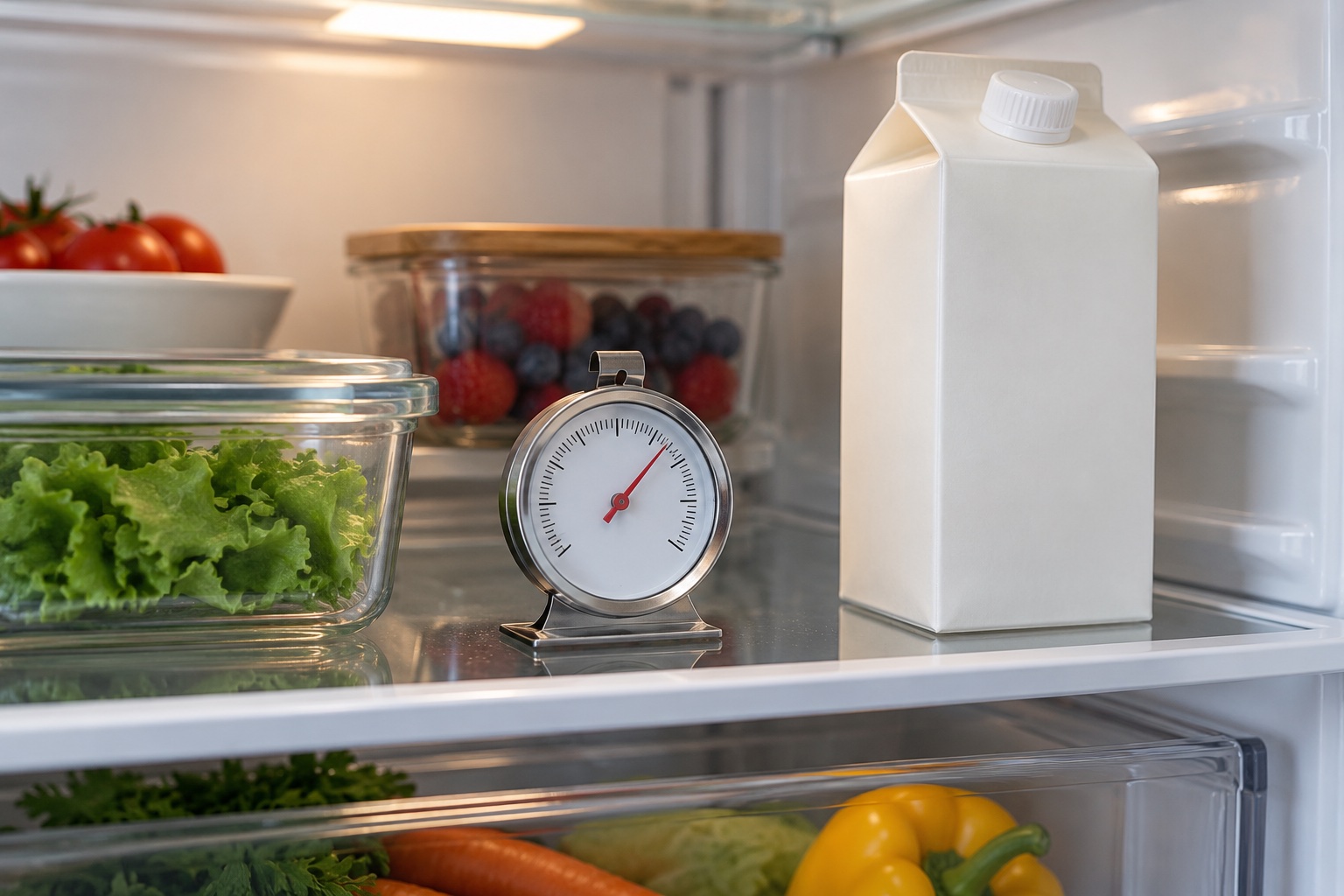
A thermometer that is hidden behind a container or too small for its reader is difficult to use. Before replacing it, check whether placement or readability is the actual problem. Make this check while your appliances are operating normally, before an outage.
1. Start free by checking what you have.
Identify any existing appliance thermometer and find its instructions. Do not assume a refrigerator's control setting is a measured temperature. FoodSafety.gov recommends appliance thermometers in both the refrigerator and freezer; its guidance calls for a refrigerator at or below 40°F and a freezer at or below 0°F.
2. Read the intended use.
On a potential replacement, look for explicit refrigerator/freezer suitability and its stated measurement range. A cooking probe, room thermometer or decorative dial is not automatically an appliance thermometer. Compare the exact model rather than a family of similarly named products. Ask the manufacturer about unclear instructions instead of improvising a test.
3. Check how you will see it.
Our practical suggestion is to consider the display from the position where you normally open the door. Can the person responsible read the scale and its units? Is there a suitable position using the mounting method the maker provides? Choose placement according to its instructions and the appliance manual. Do not drill, attach improvised fixtures or obstruct the door.
4. Record one ordinary-condition check.
After following the thermometer's setup instructions, record the date and reading in your own notes. Do not claim the device is calibrated merely because it displays a plausible number. A questionable reading or malfunction calls for the manufacturer's guidance. This guide does not provide repair or calibration instructions.
5. Keep outage decisions separate.
A thermometer is a measurement aid; it cannot make food safe or reconstruct missing temperature history. During an actual outage, keep appliance doors closed as much as possible and follow the linked FoodSafety.gov guidance for the time and food involved. Never taste food to decide whether it is safe. Resolve a shopping gap before an emergency, without treating the purchase as a guarantee.
Phone-save recap
Check the existing device. Confirm appliance use. Read the units. Follow mounting instructions. Keep official outage guidance available.
Sources and review
Sources opened October 30, 2026. The step-by-step comparison and organizing method are Ready Before Dark suggestions; linked sources support the specific guidance identified above. Manufacturer information was checked against the existing product identity. Amazon public search snapshots matched the item; live stock, seller and delivery were not verified.
- FoodSafety.gov: Food Safety in a Disaster or Emergency
- FoodSafety.gov: Food Safety During Power Outage
- Taylor: Fridge/Freezer Thermometer 5924
Choose your next household action.
Take a free private quiz, or use the digital bundle to organize your plan. Quiz answers stay in your browser.
Take a free quiz →