A HOUSEHOLD HOW-TO · FIRE SAFETY
Draw a home fire escape map
you can actually practice.
A plan on paper is useful only if the exits are real and everyone knows where to meet. Start with one sheet of paper and walk the route before you count it.
October 1 edition · Published October 1, 2026 · 5-minute read
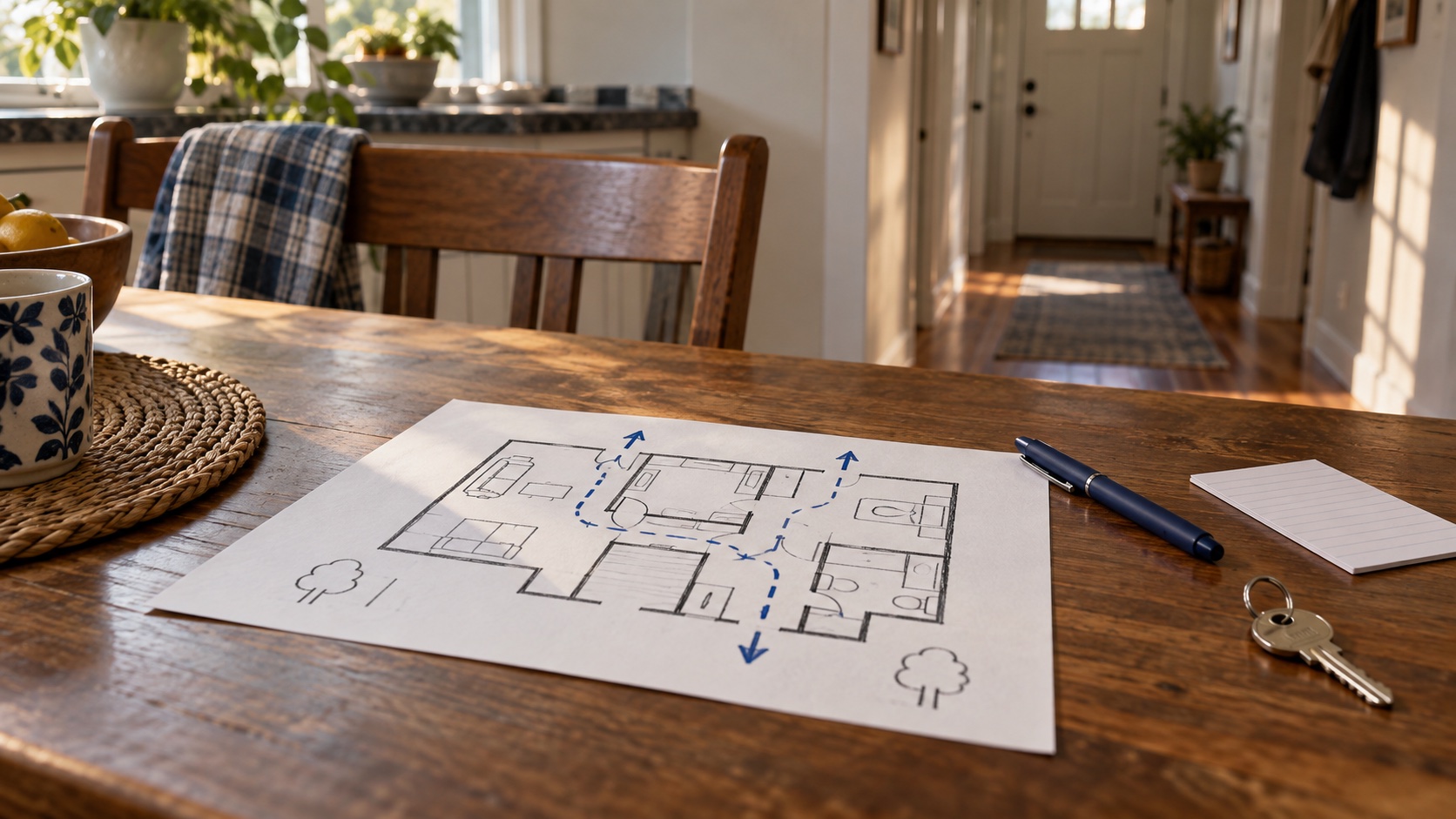
1. Sketch the rooms for free.
Take paper and a pen you already own. Draw each level of your home, including rooms, doors and windows. You do not need architectural precision; the map should help a household member recognize the actual routes. The U.S. Fire Administration starts its plan the same way: draw the home, including doors and windows.
2. Check two ways out of every room.
Walk to each room together. Identify a primary exit and a second usable route if the first is blocked. Check that the doors and windows on those routes are not obstructed and can open. Mark only routes that work for the people who would use them; an inaccessible window is not a second exit. The U.S. Fire Administration recommends two ways out of each room and clear doors and windows.
If you cannot identify two practical exits, or someone needs help evacuating, do not invent a route on the map. Ask your building manager or local fire department to help tailor the plan. For an apartment or high-rise, learn the building's exit stairs and evacuation instructions; the U.S. Fire Administration's escape-planning guidance calls for building-specific routes and stair practice.
3. Pick one outdoor meeting spot.
Choose a specific place a safe distance outside, in front of the home, where everyone can find one another. Mark it on the paper. The American Red Cross gives a neighbor's home or a recognizable front-yard landmark as examples. Avoid a vague instruction like “meet outside.” Make sure everyone knows to stay out and tell responders if someone is missing.
4. Rehearse, then correct the map.
Practice the route with everyone in the household and meet at the chosen spot. The U.S. Fire Administration recommends using the smoke-alarm test button to start a home drill; let everyone know before a planned test so it is not confused with a real alarm. The Red Cross recommends practicing the escape plan twice a year. After the practice, fix any route, door, communication or assistance gap the drill revealed. Do not climb through a high window or take another unsafe action just to finish a drill.
Keep a paper copy where household members can find it and save a phone photo for reference. These are practical memory aids, not a substitute for walking a real route. Review the map after moving furniture, changing rooms or learning new building instructions.
Sources and review
U.S. Fire Administration and American Red Cross guidance checked October 1, 2026. The paper-first sketch, phone photo and post-drill correction are optional practical suggestions. The generated hero photograph is illustrative, not a route diagram. No product is tagged: this first planning step needs no purchase.
- U.S. Fire Administration: Home Fire Escape Plans — map doors and windows, two ways out, clear routes, outside meeting spot and practice; includes high-rise guidance.
- U.S. Fire Administration: Fire Escape Plan Pictographs — household and building-specific escape planning.
- American Red Cross: 20 Ways to Help You Avoid a Home Fire — two ways out, meeting place, stay out, call 911 and twice-yearly practice.
What else should your household know?
Use the free household quiz. Answers stay in your browser.
Take the quiz →