A HOUSEHOLD HOW-TO · WATER
Find your main water shutoff
before a leak.
You do not need to buy a tool to start. Find the valve, confirm whose valve it is, and make a simple note that another adult can follow.
September 30 edition · Published September 30, 2026 · 5-minute read
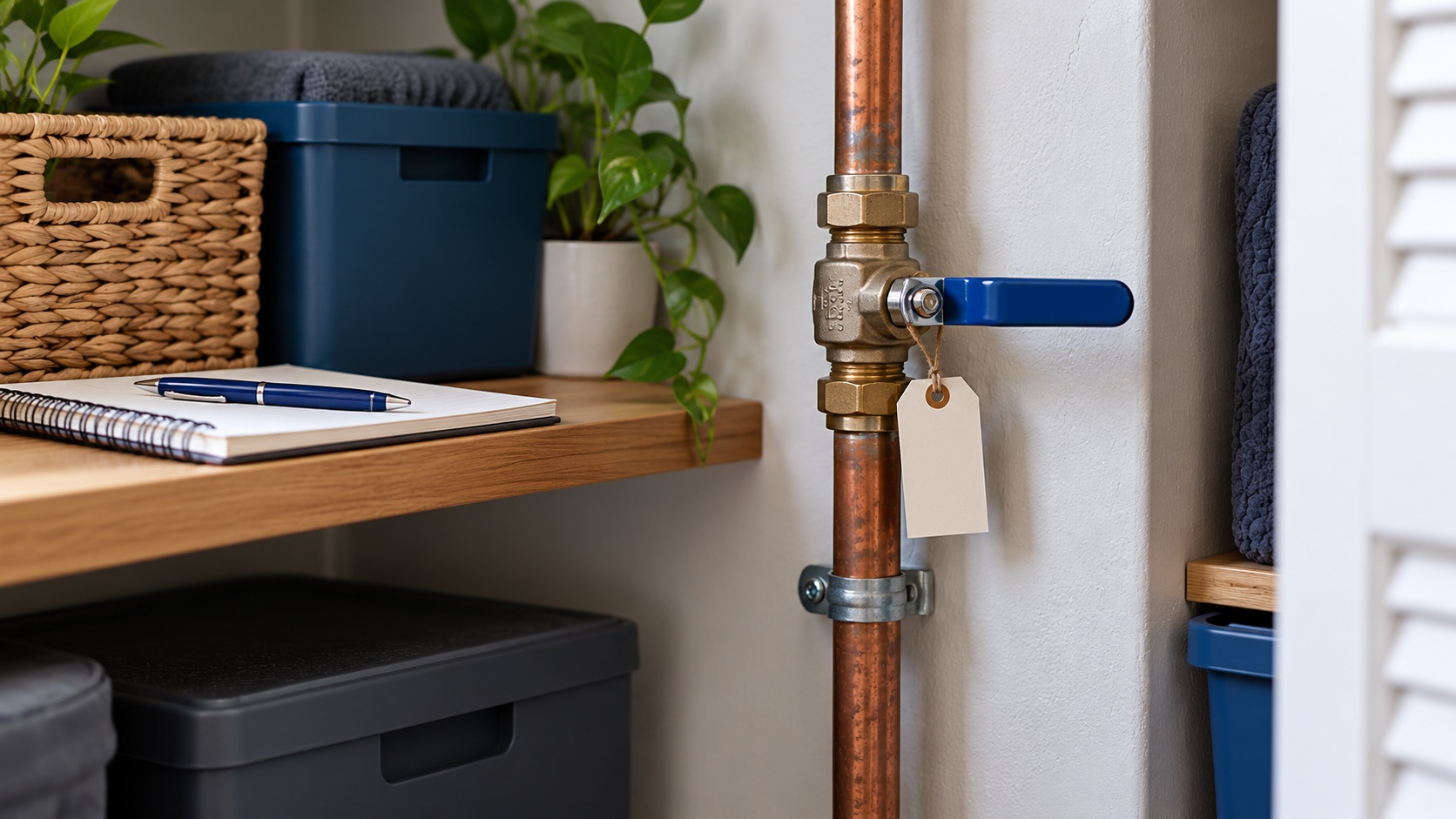
1. Find where water enters your home.
Start with a free first action: look in your basement, utility closet, garage or other accessible place where the water service line enters the building. Do not open a street meter box or remove a utility seal. The San Francisco Public Utilities Commission says home shutoffs vary: some are inside, others outside, often near the service line. The City of Columbus water utility describes its local pattern near an indoor meter. Those examples are clues, not a universal map.
If you rent, live in a multifamily building, or cannot confidently identify the supply line, ask your landlord, building manager or local water utility which valve you are permitted to operate. Write down the answer. A curbside or utility-owned shutoff may be reserved for utility staff; SFPUC specifically tells its customers not to access its water meters.
2. Confirm it before labeling it.
Do not label a guessed valve “main.” Have the property owner, plumber, manager or utility confirm which valve serves the home and what it controls. In Columbus, the utility recommends briefly closing a confirmed main valve and checking that water stops throughout the home; that is a local utility procedure, not a requirement for every household. If you are authorized to test your own valve, use your utility's instructions and plan for a temporary water interruption. If you are uncertain, have a qualified person demonstrate instead.
Never force a stiff or corroded valve with pliers. The City of Fresno water division warns that an old main valve can break or become stuck partly closed when forced. If it leaks, will not move normally, or fails to shut off the correct supply, stop and arrange a repair with the responsible owner or plumber.
3. Make a small, usable household map.
Once confirmed, put a visible removable label near the valve if the property owner allows it. On a card, write: the valve's exact location, who confirmed it, who can operate it, your local water utility's contact route, and where to get help if the valve fails. Show each responsible household member the location. A photo may help you remember the route, but do not post your home access details publicly.
Check the route again after moving storage or changing the room. If you see a drip, damp spot or unexplained water use, investigate early; the EPA WaterSense home-maintenance guidance recommends checking for leaks and contacting your water utility about any available leak alerts. A shutoff plan helps limit damage, but it does not diagnose a leak or make disrupted tap water safe to drink.
Sources and review
Primary utility, EPA and CDC guidance checked September 30, 2026. Locations, ownership and test rules vary by service area. The household card and photo are optional practical suggestions, not utility requirements. No product is tagged: identifying and documenting a valve does not require a purchase. The image is AI-generated and not a valve-identification guide.
- San Francisco Public Utilities Commission: Home Water Shutoff Valve — varied locations and utility meter access.
- City of Columbus: Locating a Water Meter & Emergency Service Valve — marking and locally checking the main valve.
- City of Fresno Water Division: Property Owners and Contractors — varied layouts and damage risk when forcing an old valve.
- U.S. EPA WaterSense: Home Maintenance — checking leaks and asking a utility about leak alerts.
- CDC: Safety Guidelines: Floodwater — water and electrical hazards.
What else should your household know?
Use the free household quiz. Answers stay in your browser.
Take the quiz →