A HOUSEHOLD HOW-TO · MAINTENANCE
Give your emergency kit a maintenance date.
October 11 edition · Published October 11, 2026 · 5-minute read
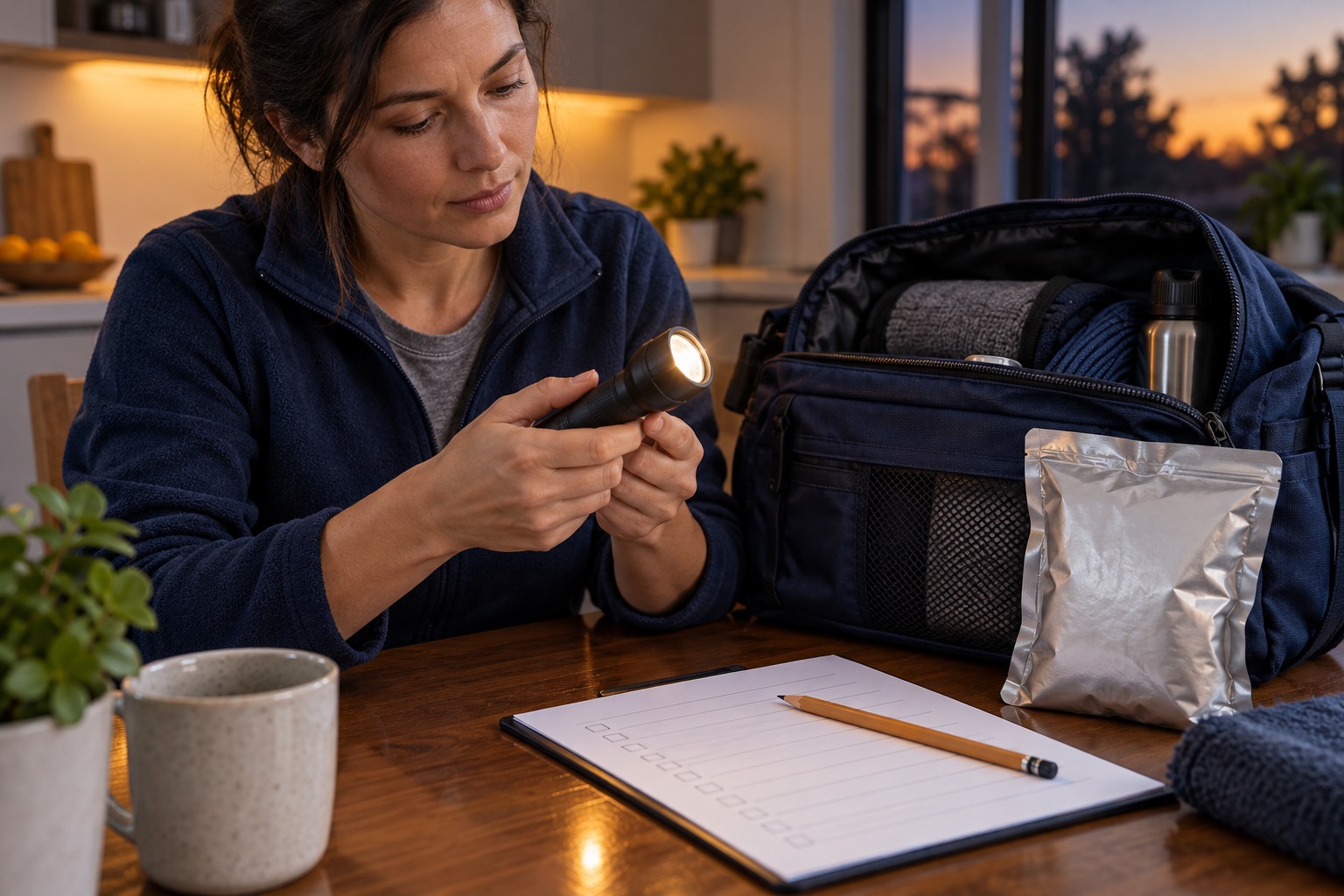
Imagine reaching for the household bag and finding a missing flashlight and an old contact card. Packing is one task; keeping the contents usable is another. Start with a dated inventory of what is actually there. This is advance planning, not an instruction to delay evacuation or sheltering.
1. Start free with the bag you already have.
Bring the existing kit to a clear table during ordinary conditions. Use a sheet of paper to record the check date and where the kit normally lives. List actual contents rather than copying a shopping checklist and marking it complete. If you have no kit, name that gap; this maintenance check does not create supplies you do not have.
2. Check condition and instructions, not just quantity.
Look at sealed food and water packaging and follow labeled storage and replacement instructions. Set damaged or uncertain items aside for an appropriate source-specific decision; do not taste suspect food to test it. Do not open sealed supplies merely to inspect inside. Review the instructions for the equipment already in your bag. A listed item is not evidence it still works.
3. Test one useful chain.
Try your existing flashlight with its intended batteries, following the manual. Keep the test in normal safe conditions and restore the equipment to its intended storage state. Record the result and any missing compatible batteries. Do not repair leaking, swollen or damaged batteries as a preparedness exercise. For other devices, use their own instructions; this flashlight check does not certify a radio, charger or alarm.
4. Reconcile the people who will use it.
Compare the contents with today's household needs, including accessibility, children and pets where relevant. Confirm that private contact copies are current without uploading personal information here. Review medical supply and prescription planning with the appropriate clinician or pharmacist; do not change doses, use expired medicine or create an emergency stockpile based on this guide. Check whether the bag is reachable and manageable for the person expected to carry it, without blocking an exit.
5. Give gaps an owner and a next check.
Write each missing or unresolved item separately, the person who will handle it and the next action. Put the inventory with the kit and add a reminder to a calendar you already use. Choose a check date suited to labeled replacement dates and household changes; the reminder is our organizing suggestion, not a universal shelf-life rule. Recheck after using supplies, moving or a material change in household needs. During an actual emergency, follow current official protective instructions immediately; do not delay to finish the inventory.
Phone-save recap
Date the inventory. Inspect labels and condition. Test the existing flashlight as instructed. Update household needs privately. Record gaps and the next check. Follow actual emergency instructions promptly.
Sources and review
American Red Cross Survival Kit Supplies guidance opened October 11, 2026 informs which contents and household needs to review. The dated inventory, condition check, equipment test, gap ownership and reminder are Ready Before Dark’s organizing method. Follow each item’s manufacturer instructions and appropriate professional guidance. No product is selected: existing paper and supplies are the free first action.
What does your household already have?
Use the free household quiz. Answers stay in your browser.
Take the quiz →