A HOUSEHOLD HOW-TO · RECOVERY
Make a private document go-folder
before you need to leave.
If you had to leave home tonight, could you find your identification, insurance details and key contacts without searching every drawer? Make the first version with paper you already own.
October 3 edition · Published October 3, 2026 · 5-minute read
1. Start free: write a find-it list.
On a blank sheet, name the places where your household keeps identification, insurance information, housing papers and medical or prescription information. You do not need to copy account numbers or passwords onto this first list. The Consumer Financial Protection Bureau recommends a way to locate important documents quickly after a disaster; its free disaster checklist and FEMA's Emergency Financial First Aid Kit offer more detail. Your first result is knowing where the records are, even if you have no printer or special pouch.
2. Choose the few copies that would help.
Use the free FEMA Emergency Financial First Aid Kit checklist to review what applies to your household. A renter might include a lease and insurance contact; a homeowner may need a deed or mortgage contact. Identity papers, relevant health coverage, prescriptions and important family records may also matter. Make copies where lawful and useful, and keep the originals where your household normally protects them. Do not turn this into a demand to carry every original or to disclose more than a service actually requires.
3. Protect the paper and digital versions.
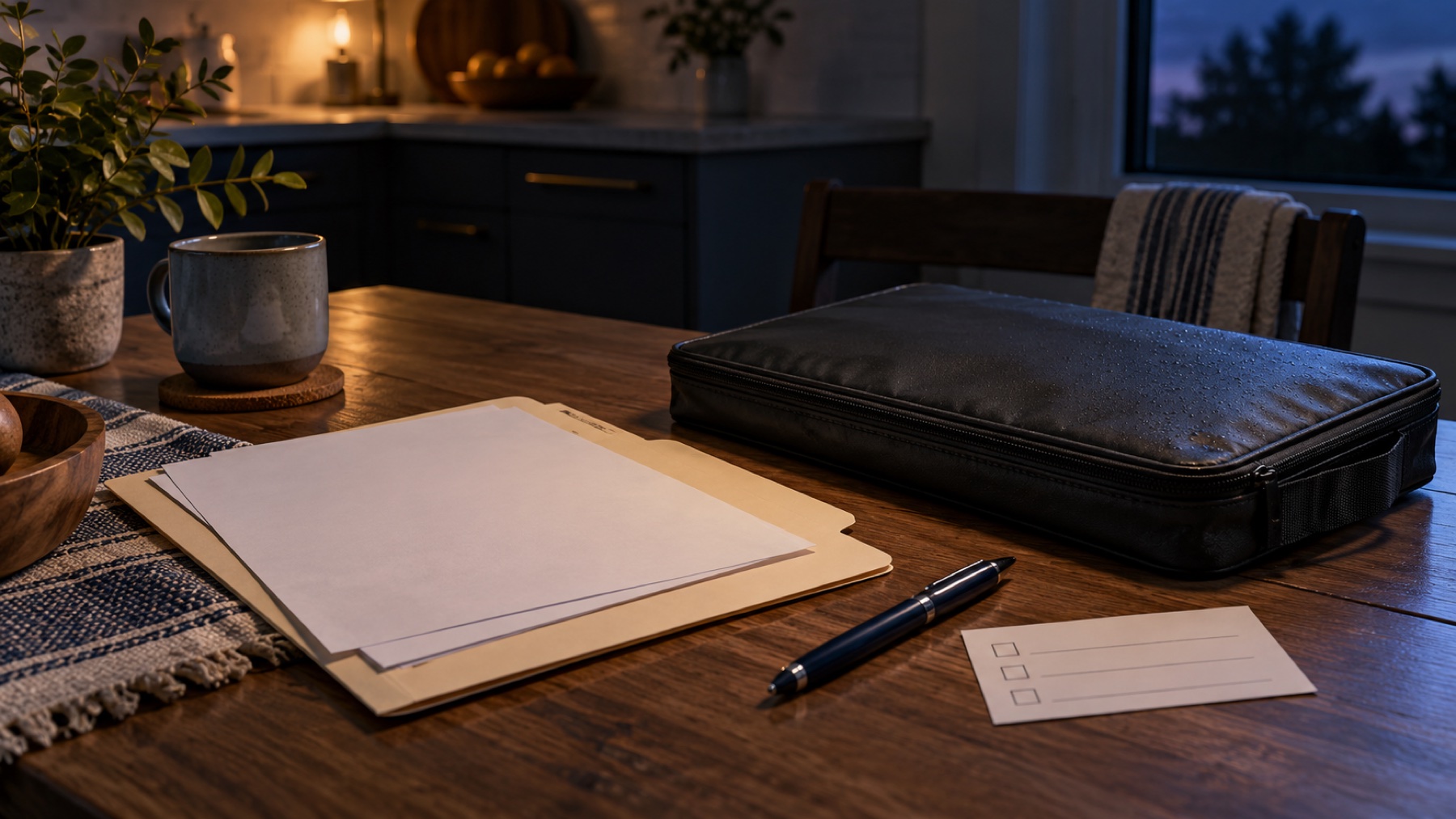
Put paper copies in a secure place the right people can reach. FEMA's kit advises safeguarding paper at home in a fireproof and waterproof box or safe, a bank safe deposit box, or with a trusted person; its electronic-copy guidance calls for a password-protected format or a secure offsite service. Ready.gov flood guidance also recommends a waterproof container and password-protected digital copies. A household envelope can organize the list today, but do not assume an ordinary envelope or the pouch pictured here protects against fire or water. Avoid an unprotected phone photo album or publicly shared cloud folder for sensitive records.
4. Decide access before an emergency.
Tell a trusted adult in the household where the protected copies are and how to retrieve them. If you use a safe deposit box or another person's storage, check who can actually access it when you cannot; FEMA notes that bank access rules may matter. Keep the recovery method for any password-protected copies secure, and do not put the password on a note attached to the folder. The goal is a usable backup, not a pile of sensitive papers that anyone can take.
5. Recheck the folder after changes.
Review the list and copies after a move, insurance change, new household member or major medical change. Mark when you last checked them without exposing personal details on the outside. If an evacuation is already underway, take only what is safely within reach and follow officials first.
Sources and review
CFPB and FEMA/Ready.gov guidance checked October 3, 2026. The short find-it list, selective folder and recheck routine are our practical organization steps. The generated image is illustrative. No product is tagged: the first useful step needs only existing paper, and no exact container was selected or verified.
- CFPB: Get prepared before a disaster or emergency strikes — locating important records, copying and safe storage.
- FEMA: Emergency Financial First Aid Kit checklists — household identification, financial and legal records.
- FEMA: Emergency Financial First Aid Kit — safeguarding paper and password-protected electronic copies; access to safe deposit boxes.
- Ready.gov: Floods — waterproof document storage, password-protected copies and evacuation direction.
What else should your household know?
Use the free household quiz. Answers stay in your browser.
Take the quiz →