A HOUSEHOLD HOW-TO · EVACUATION
Plan where your pet will go
before you have to leave.
“We'll take the pet” is not a destination. In ten calm minutes, write one place to try, one backup and the number you will call to confirm the current rules.
October 4 edition · Published October 4, 2026 · 5-minute read
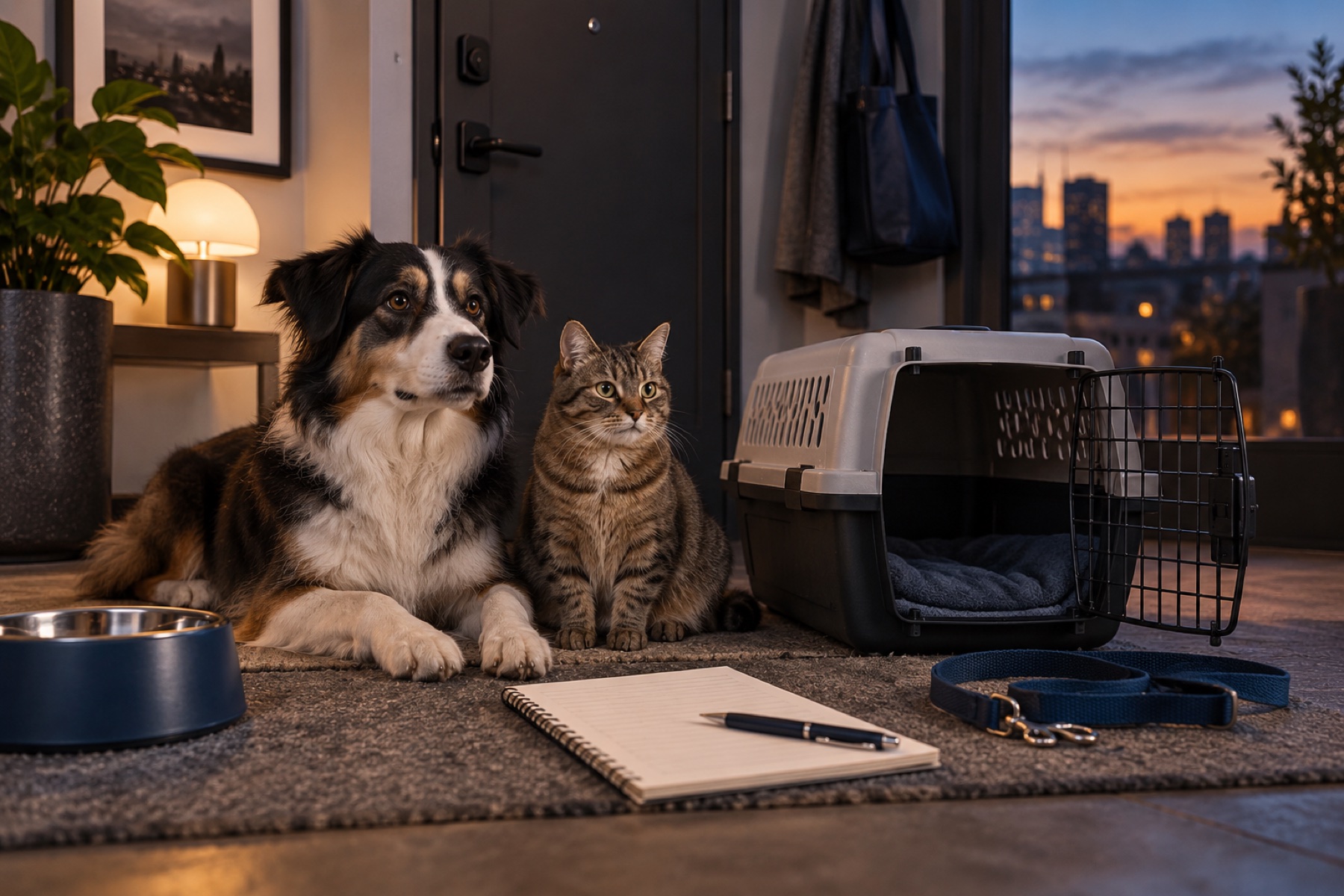
1. Start free: name a place and a backup.
On paper, write the name and phone number of a friend or relative outside your area who might host both you and your pet. Add a second option, such as another person, a pet-friendly lodging option or a boarding facility. These are candidates until you contact them. The CDC pet emergency guide advises planning where both people and pets can stay, plus a backup when you cannot return home quickly. If you do not drive, ask a trusted person about transport and check local emergency-management options in advance.
2. Confirm the rules, don't assume a shelter takes pets.
Call your first choice during normal conditions and ask: Are pets accepted, which kinds and sizes, what vaccination or carrier records are required, and whom should I call if an evacuation changes the arrangement? Write the answer and check date beside the number. Ask a hotel about its current pet policy and availability when you actually need it. The American Red Cross explains that shelter arrangements can depend on the incident and animals may be housed separately; the CDC also warns many centers do not admit household pets. Service animals have different rules; do not apply a household-pet restriction to a service animal.
3. Put the pet's identity and care information together.
Check that the collar tag has current contact information. If your pet is microchipped, confirm the registry details are current. Keep a recent photo, veterinarian number, vaccination record, medication instructions and feeding routine in a protected place you can reach. The CDC pet-kit list includes these records, identification, food, water, medication and an appropriately sized carrier or leash. Ask your veterinarian how to plan medication or species-specific needs; do not change a prescription because of this guide. Keep sensitive ownership or medical records out of public posts and this site's forms.
4. Practice a short departure with the gear you have.
Locate the current leash, harness or carrier; check its condition and whether it is suitable for your animal. Let your pet get used to it during a calm, brief practice, then try the route from its usual resting or hiding place to your exit. Decide who handles each animal and where the carrier or leash will wait. CDC recommends practicing carrier use and family evacuation with pets. The goal is to learn what takes time while there is no hazard, not to force a frightened animal during a real emergency.
5. Make a small supply handoff and keep it current.
Put a written copy of the destination numbers with the pet's accessible supplies. Start with the food, water, bowls, medicines and cleanup items already at home; use the CDC checklist to see what is missing for your animal. Store food and medicines as their labels and your veterinarian direct, and review the list after a move, new medication or contact change. A pet plan fits beside the household's own water, medicine and evacuation plan; it does not replace them.
Sources and review
CDC and American Red Cross guidance checked October 4, 2026. Destination calls, a dated answer and the short practice are our household organization steps. Shelter availability and rules change by incident; this guide promises no placement. The generated image is illustrative. No product is tagged: the first action needs paper and a phone, and no exact carrier was selected or verified.
- CDC: Be Prepared—Pet Safety in Emergencies — destination and transport planning, ID, buddy system and evacuation practice.
- CDC: Build a Pet Disaster Preparedness Kit — records, food, water, medications and suitable transport equipment.
- CDC: Pets in Evacuation Centers — pet admission varies; arrange alternatives ahead of time.
- American Red Cross: Pet Disaster Preparedness & Recovery — call-ahead planning, possible separate animal housing and practice.
What else should your household know?
Use the free household quiz. Answers stay in your browser.
Take the quiz →