A HOUSEHOLD HOW-TO · FOOD
Know your fridge and
freezer temperatures.
A thermometer helps you replace “it feels cold” with an actual reading. Set up and learn your normal numbers before the power goes out.
September 26 edition of the Journal · Published September 26, 2026 · 4-minute read
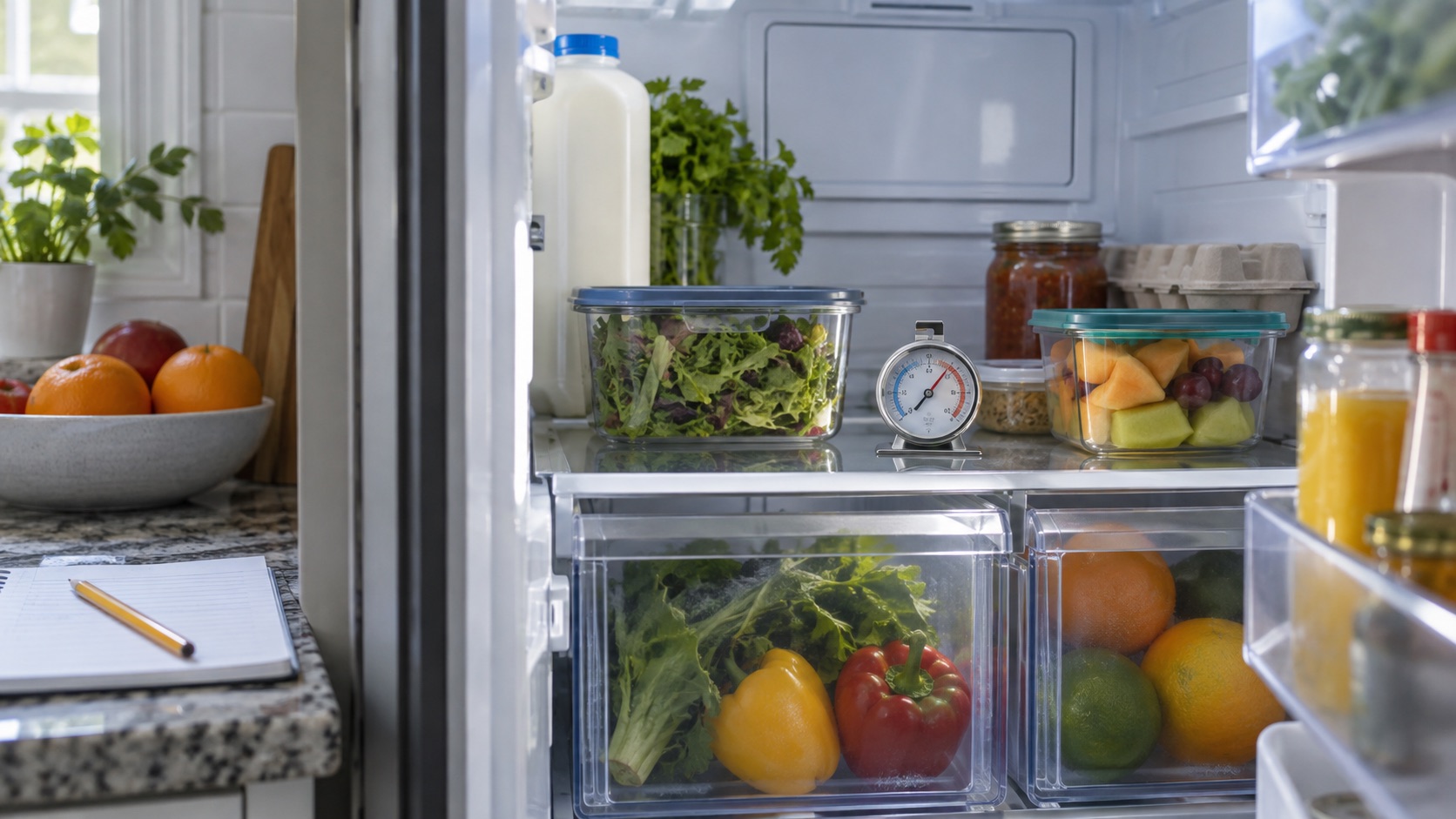
1. Check what you already have.
Look for a working built-in temperature display or an appliance thermometer in your refrigerator and freezer. If you have thermometers, check that you can read them and that they stay in place when the door closes. This is the free first action. A room thermometer or a meat probe used only for cooking is not automatically a substitute for a thermometer designed to remain in an appliance; check its intended use.
2. Put one in each appliance.
FoodSafety.gov recommends appliance thermometers in both the refrigerator and freezer. Place or hang each one according to its instructions where you can see it with a brief door opening. Read it when the appliance has been running normally, and record your usual readings in a household note. FoodSafety.gov says the refrigerator should be at or below 40°F (4°C) and the freezer at or below 0°F (−18°C).
If a normal reading is warmer than that guidance, address the appliance setting or a possible problem before treating the food as safely stored. The reading is useful information; this article cannot diagnose your refrigerator.
3. Put the decision chart next to the plan.
Save the FoodSafety.gov power-outage food chart on your phone, or print it. During a real outage, record when power stopped and keep the doors closed as much as possible. FoodSafety.gov says an unopened refrigerator keeps food safe for up to about four hours, while a full closed freezer holds temperature for approximately 48 hours and a half-full one for about 24 hours. These are estimates, not a blanket verdict on every item.
4. Use the reading after power returns.
FoodSafety.gov says a freezer thermometer reading of 40°F (4°C) or below when power returns can help assess whether frozen food may be refrozen. If you do not have a freezer thermometer, evaluate each package: food with ice crystals or at 40°F or below may be refrozen or cooked. Use the official chart for each food. Discard refrigerated perishables after four hours without power, and do not taste food to test safety. A thermometer cannot make spoiled food safe.
Sources and review
Official food-safety and product sources checked September 26, 2026. The setup sequence and note-taking are optional practical suggestions. No government endorsement is implied. The illustrative image is AI-generated; rely on your own appliance's measured display rather than the pictured dial.
- FoodSafety.gov: Food Safety in a Disaster or Emergency — appliance thermometers, normal temperatures and outage windows.
- FoodSafety.gov: Food Safety During Power Outage — item-by-item decisions and no taste test.
- Taylor: Fridge/Freezer Thermometer, SKU 5924 — hang/stand use and care.
Practice the food decision.
Use the free power-outage quiz and the food guide. Your quiz answers stay in your browser.
Take the quiz →