A HOUSEHOLD HOW-TO · POWER
Test your phone charging backup
before the lights go out.
A charged battery pack is useful only if the cable fits your phone and the whole chain works. Find out on an ordinary evening, while you still have power.
October 2 edition · Published October 2, 2026 · 5-minute read
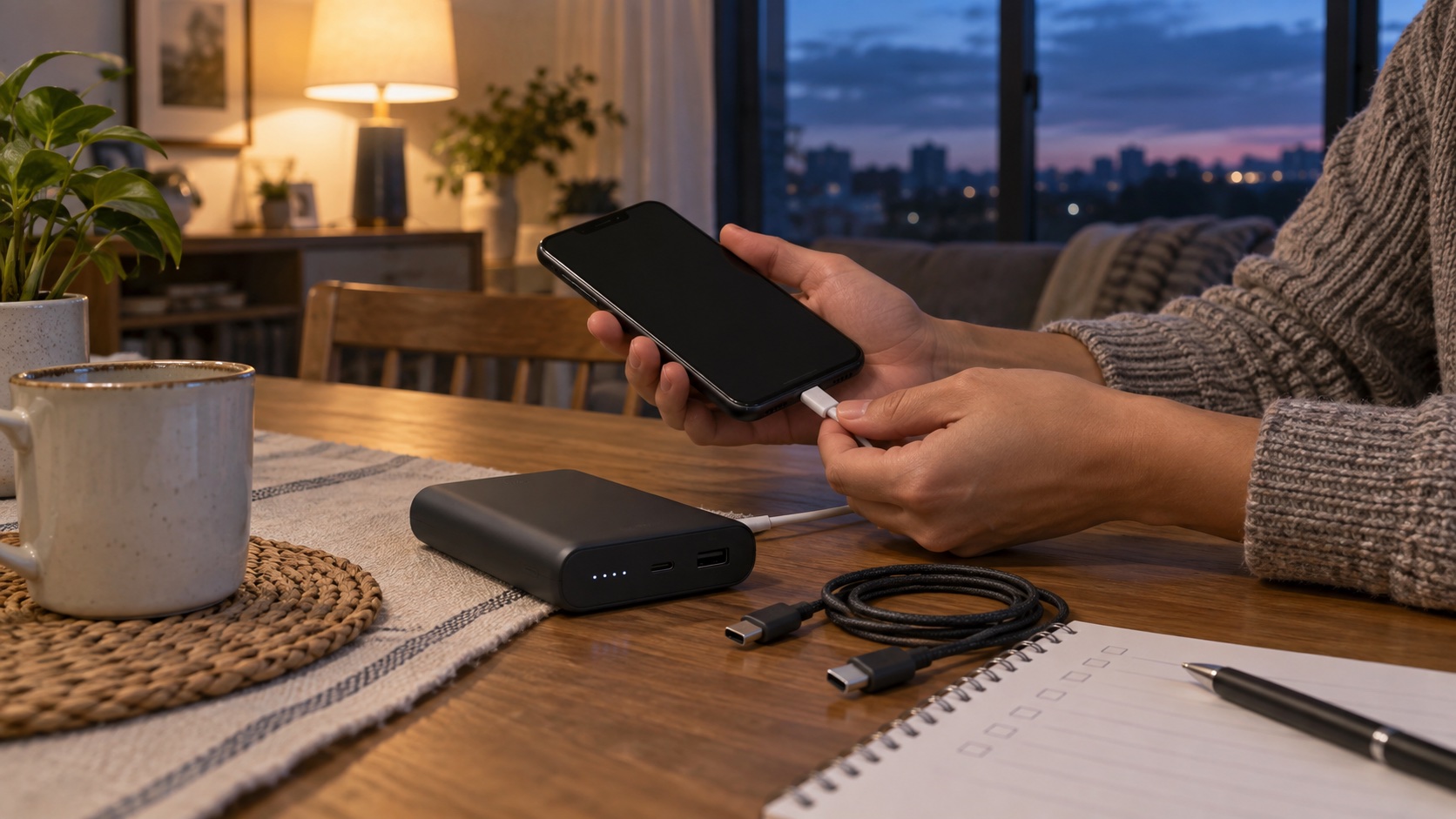
1. Do the free two-minute connection test.
Bring together the phone you use, its compatible cable and any portable battery pack you already own. Check the connector at both ends. Plug the pack into the phone and confirm that the phone actually shows it is charging; do not assume matching-looking plugs mean the setup works. The American Red Cross power-outage guide calls for chargers and batteries for phones as part of communication planning. If you do not own a pack, this first step still finds the right cable and exposes a gap; no purchase is required to begin.
2. Charge safely, then make the kit findable.
Charge the phone and pack according to their manufacturers' instructions. Keep the cable that passed the test with the pack, where household members can find it in the dark. Add a short note such as “phone cable tested” and the month you checked it. These are practical organization suggestions, not a promise that a battery will last a particular number of hours.
Before charging or storing a lithium-ion pack, inspect it. The U.S. Fire Administration says to stop using a battery that has an odor, changes color or shape, leaks, makes odd noises or becomes too hot. Keep spare packs away from combustible material and direct sunlight or a hot car. Follow the device instructions for charging and storage; do not improvise a repair or keep using a suspect pack.
3. Give the phone a fallback.
Put a paper copy of key numbers beside the charging kit. If you have a battery-powered or hand-crank radio, test that too, and learn where your local officials publish outage information. The Red Cross recommends a paper contact list, local alerts and communication devices that work without household power. A charged phone still may not connect if networks are disrupted; keep the household contact card and meeting plan accessible without an app.
4. Set a small recheck.
Set a reminder to check the pack's charge level, the cable fit and the phone's charging indicator again. Use the manufacturer's recommended charging and storage routine for your actual device. If a cable or pack fails the test, label it as unusable and update the plan instead of counting it as backup capacity. The Red Cross notes that an extended outage can disrupt communications and medical needs; for power-dependent care, use a clinician- and supplier-approved backup plan rather than this household phone kit.
Sources and review
American Red Cross and U.S. Fire Administration guidance checked October 2, 2026. The two-minute test, kit location, label and recheck reminder are our practical organization steps. The generated photograph is illustrative. No product is tagged because testing equipment already in the home is the useful first action; no exact new item was selected or verified for this article.
- American Red Cross: Power Outage Safety — backup communication devices, chargers/batteries, paper contacts, local alerts and care-needs planning.
- U.S. Fire Administration: Battery Fire Safety — warning signs, storage and handling for lithium-ion batteries.
What else should your household know?
Use the free household quiz. Answers stay in your browser.
Take the quiz →