A HOUSEHOLD HOW-TO · SHOPPING WITH A PLAN
Turn kit gaps into a shopping list you can finish.
November 4 edition · Published November 4, 2026 · 4-minute read
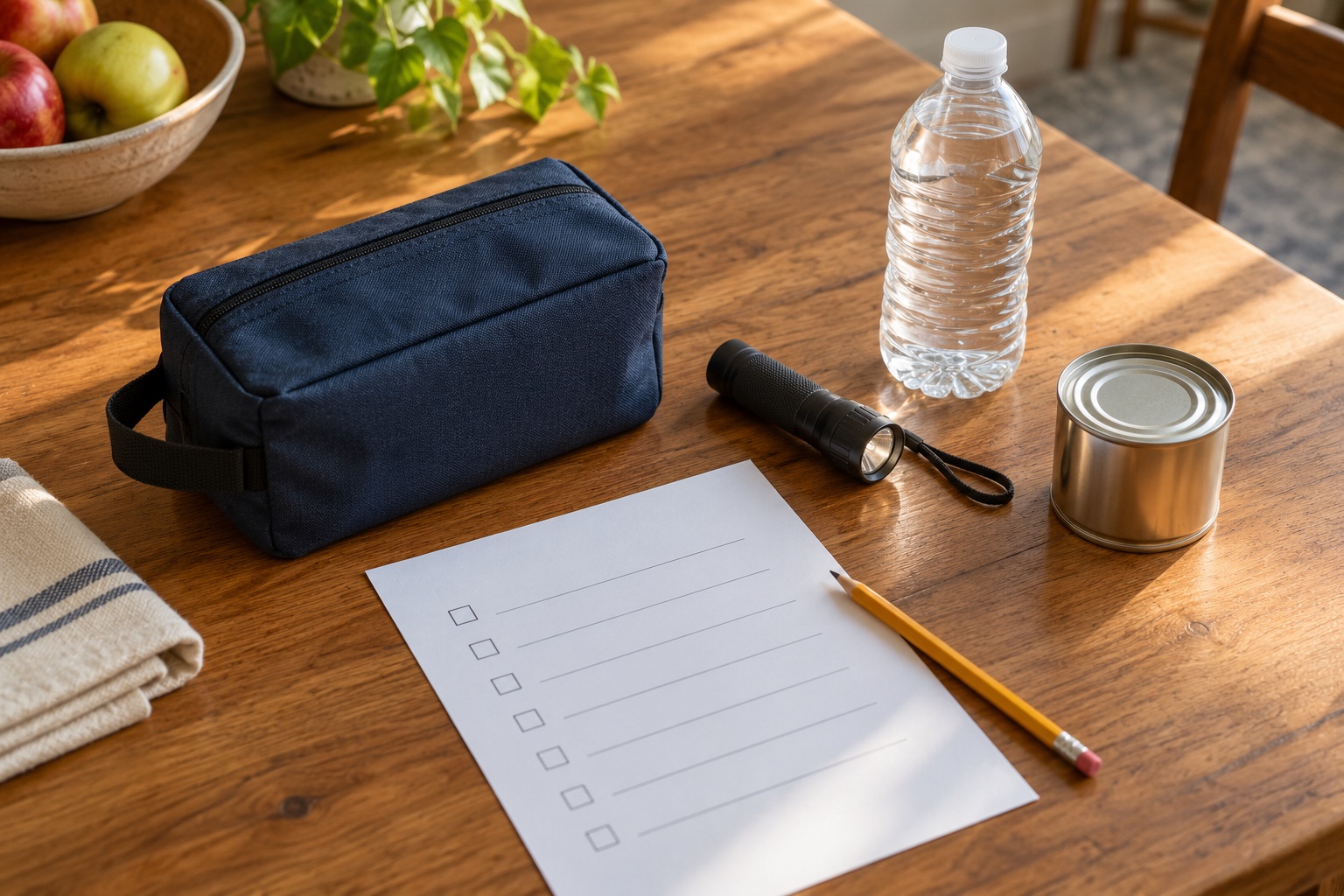
An emergency-kit checklist can turn into a long cart before you have checked a single cupboard. This exercise produces something smaller: a list of real gaps, each with a next step. It is an organizing method, not a complete kit specification.
1. Start free with one shelf or bag.
Choose the place where you already keep preparedness supplies. Write down what is present without buying anything. Use the Red Cross supply checklist to prompt your review, while accounting for your household's own needs. Do not count an item as ready merely because you recognize its packaging; check the instructions and condition appropriate to that item.
2. Give each entry a clear status.
Our suggested labels are “have,” “missing” and “question.” A working flashlight you can locate might belong under have. A battery specification you cannot confirm belongs under question. Avoid treating uncertainty as either a verified supply or an immediate reason to buy a duplicate.
3. Write the job beside the object.
For each missing item, complete “this would help us…” in plain language. That turns a vague product category into a requirement you can compare. If two proposed items do the same job, decide whether both are needed before ordering. If the job requires professional advice, put that conversation on the list instead of guessing at equipment or treatment.
4. Choose one manageable next action.
Use your available budget and the gaps you have identified to select a small next step. It could be finding a manual, asking a household member where something is stored, or purchasing the exact compatible item. The order is household-specific; this article does not rank medical, accessibility or other individual requirements.
5. Close the list when the item arrives.
Confirm the item matches the requirement, read its instructions and record its storage location. Then update the inventory rather than leaving the shopping row open. For food, FoodSafety.gov notes that special dehydrated emergency food is not required; suitable familiar pantry items can be part of your plan. Check the actual food guidance and household needs before counting them.
Keep the list somewhere the responsible adults can find. A useful completed row says what changed and where the item is, not simply that a package was delivered.
Phone-save recap
Inventory one place. Separate gaps from questions. Name each job. Choose one action. Record the result.
Sources and review
Sources opened October 30, 2026. The step-by-step comparison and organizing method are Ready Before Dark suggestions; linked sources support the specific guidance identified above. The reader must identify their own missing items first; this prioritization guide does not select an exact product.
Choose your next household action.
Take a free private quiz, or use the digital bundle to organize your plan. Quiz answers stay in your browser.
Take a free quiz →